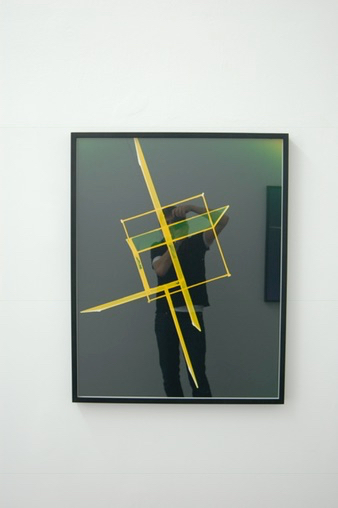
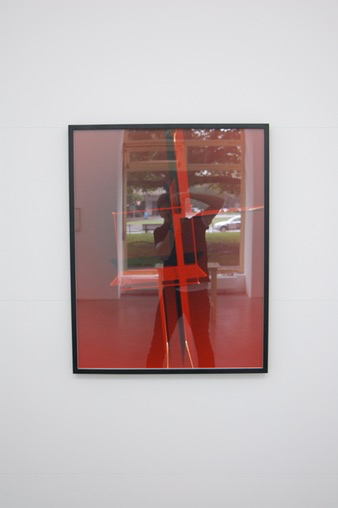
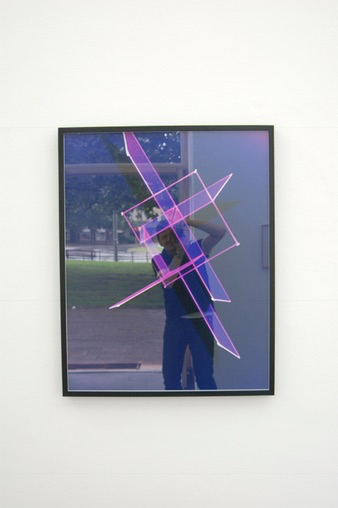
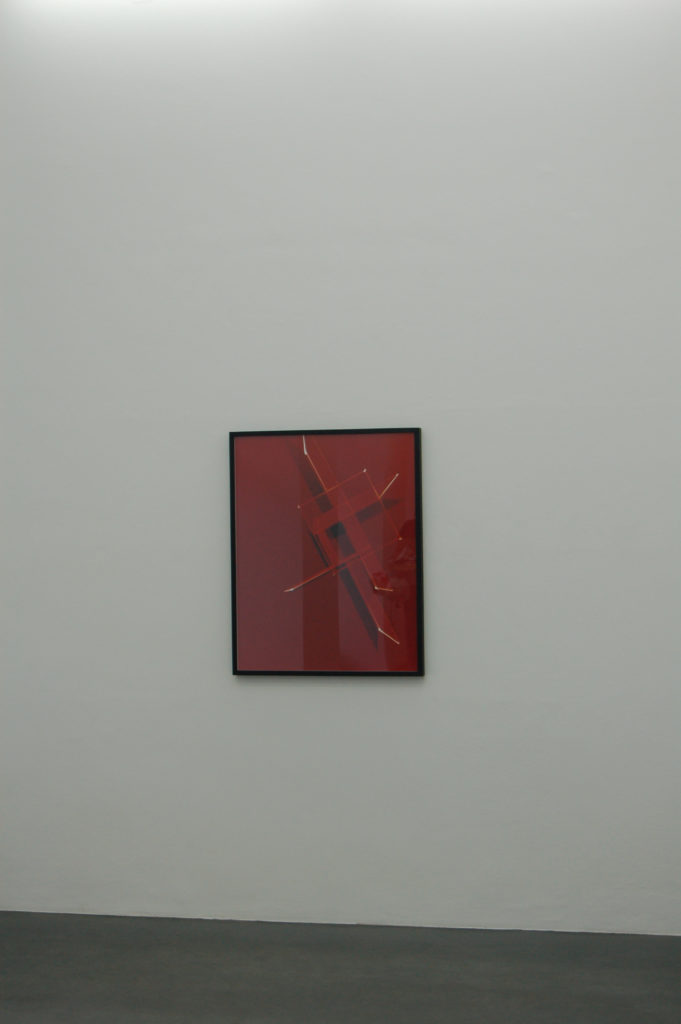
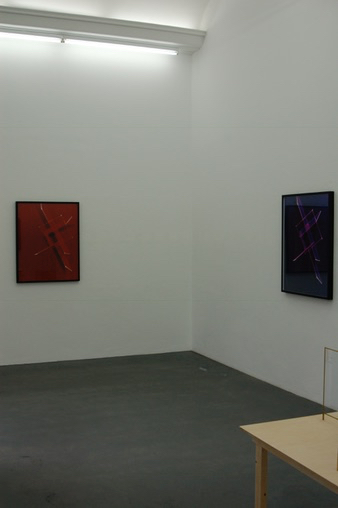
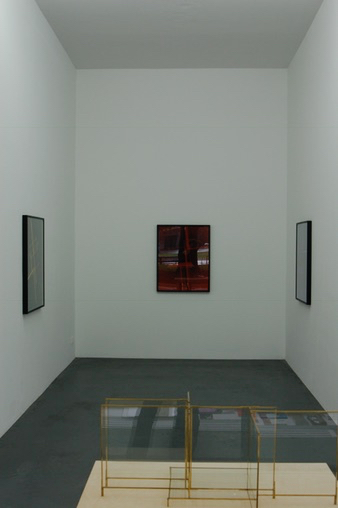
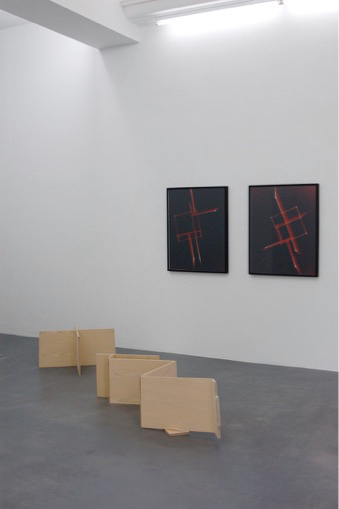
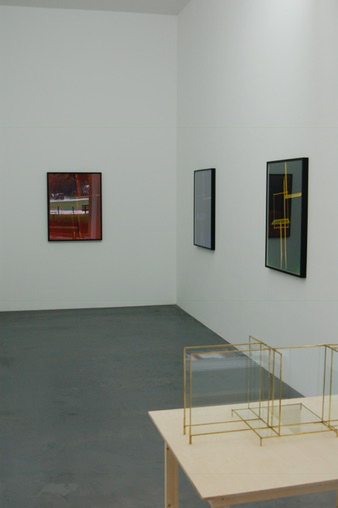
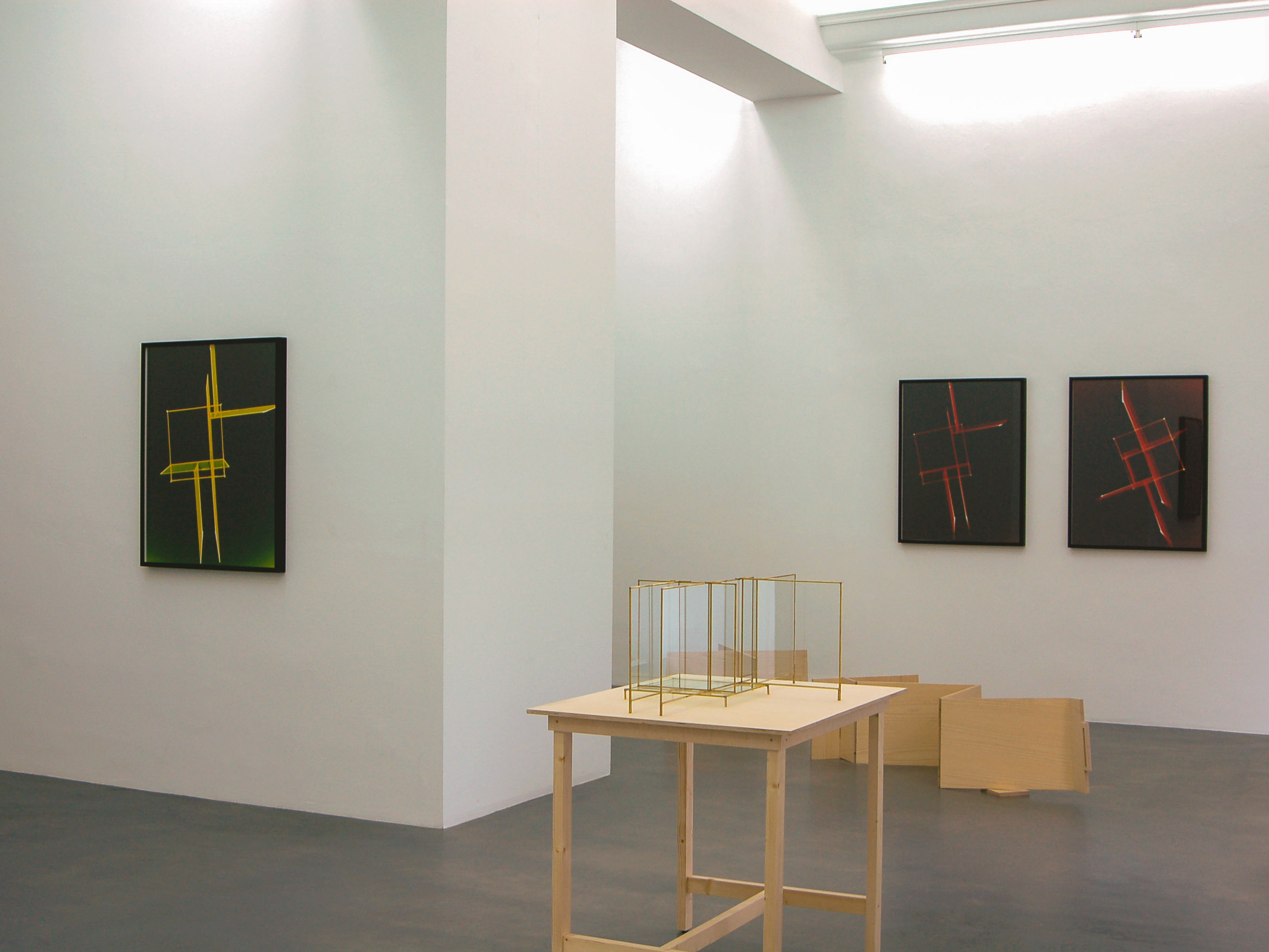
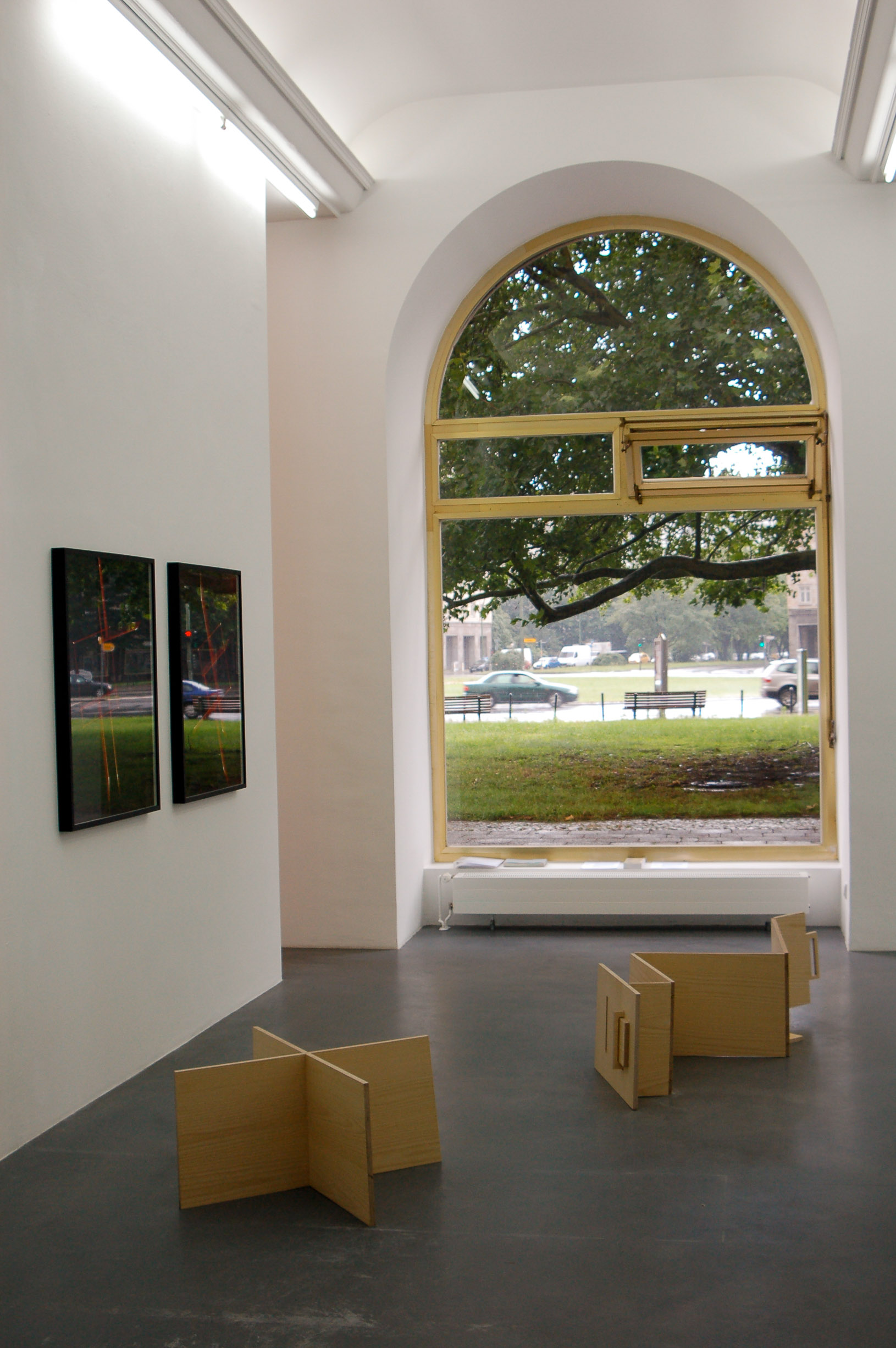
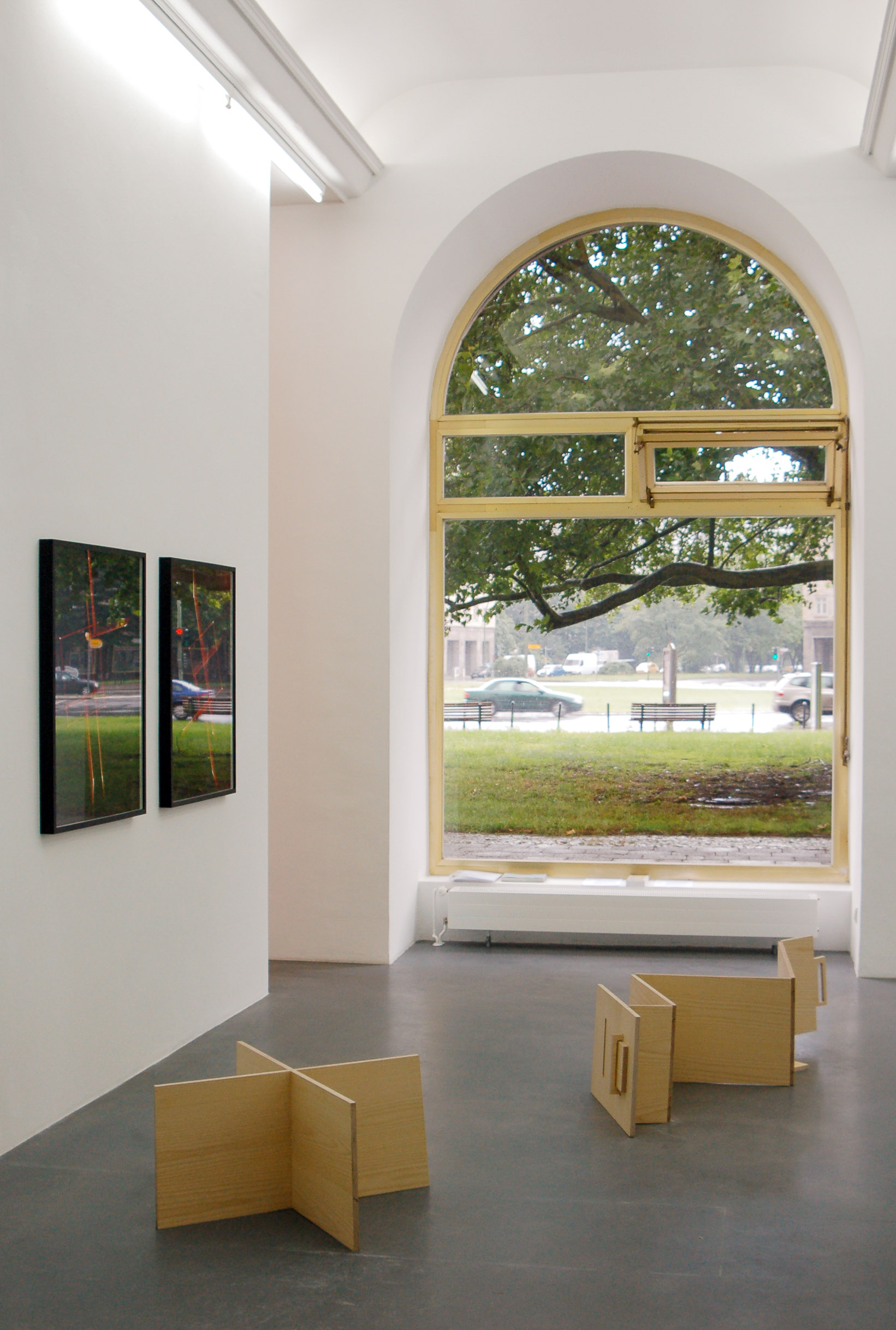
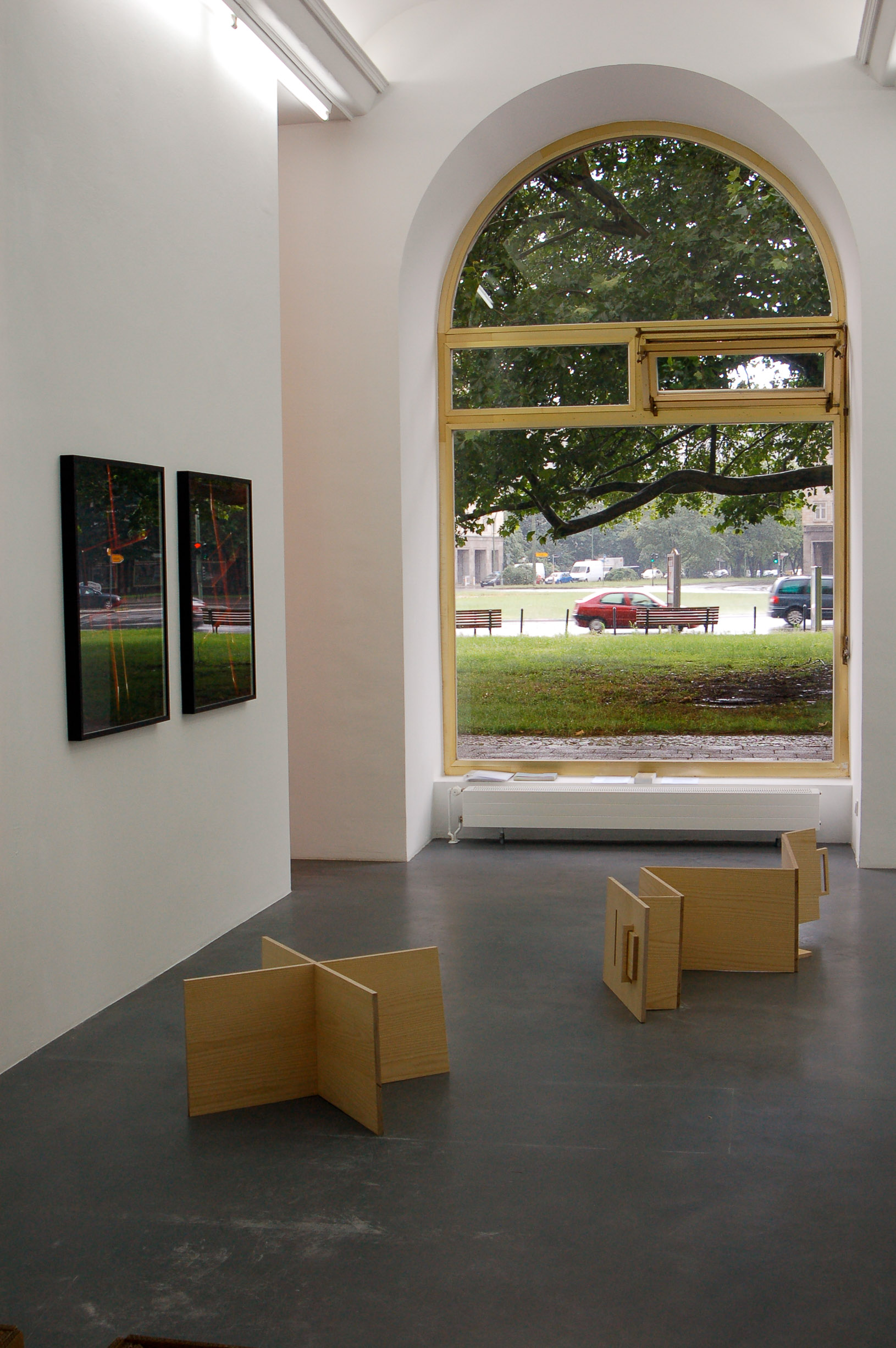
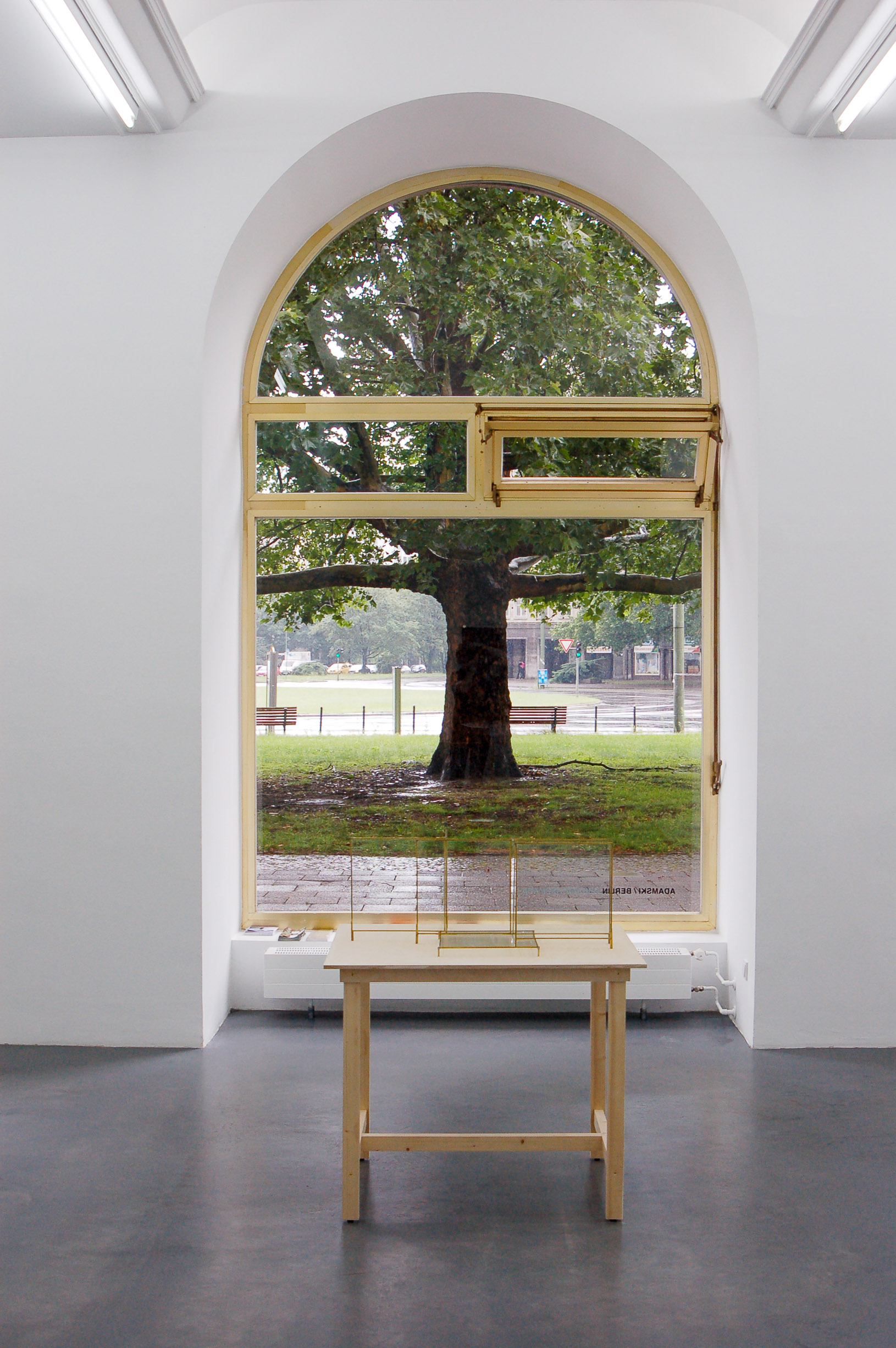
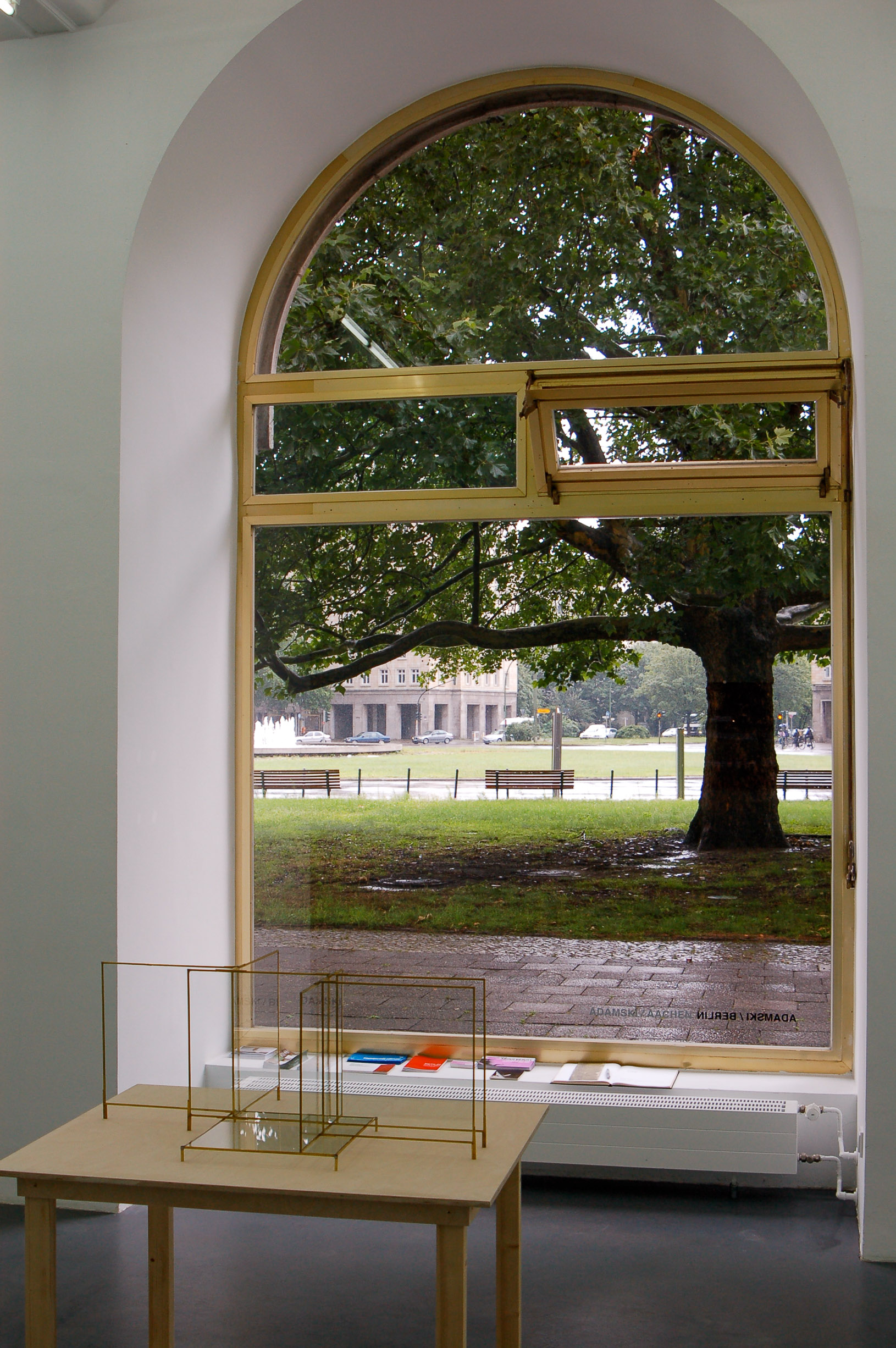
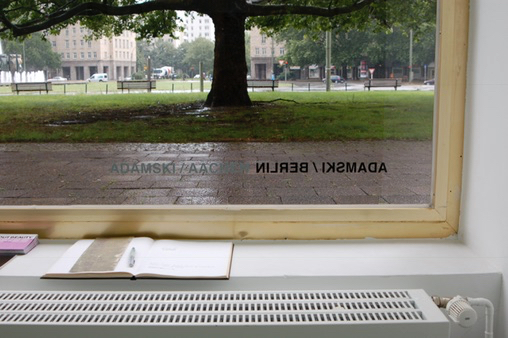
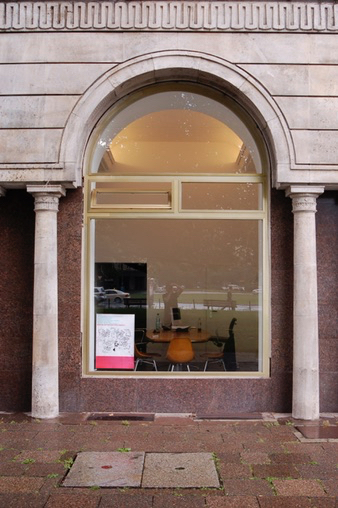
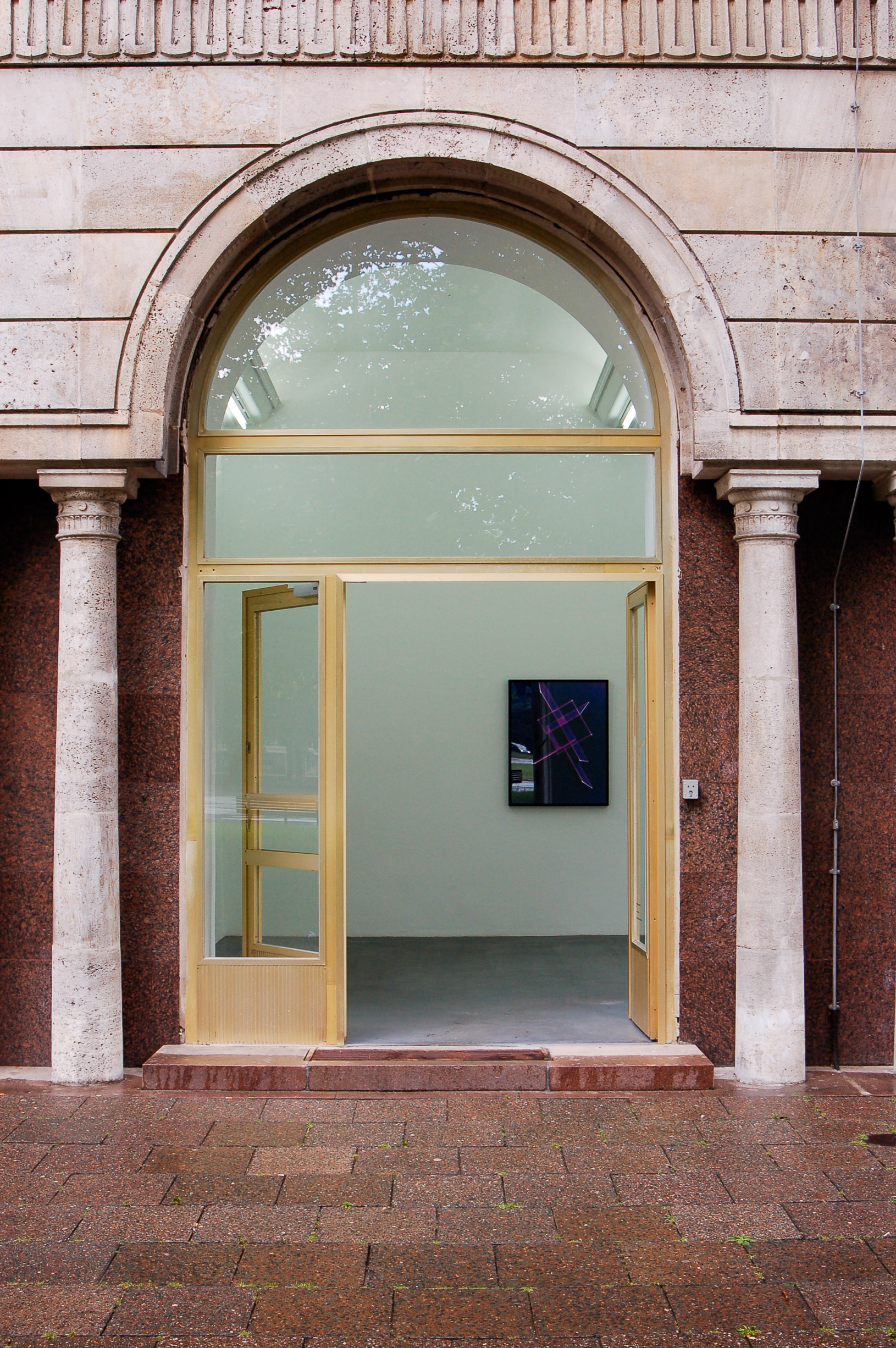
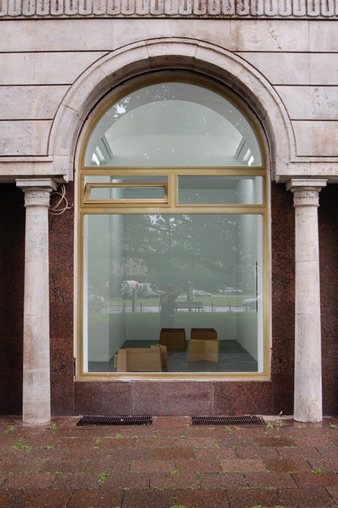
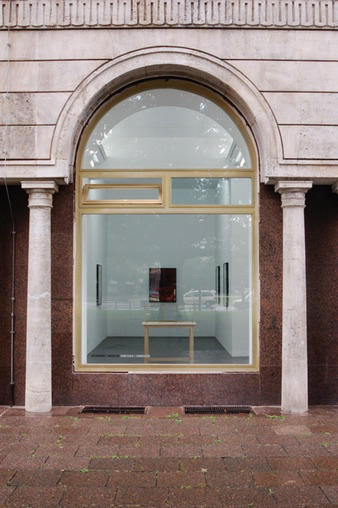
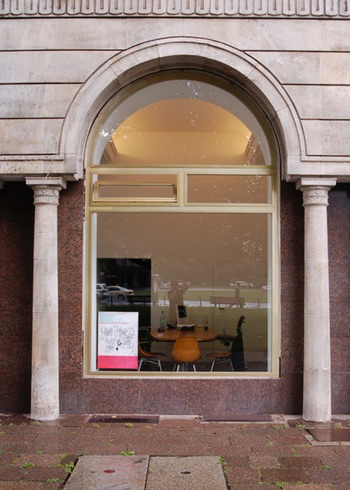
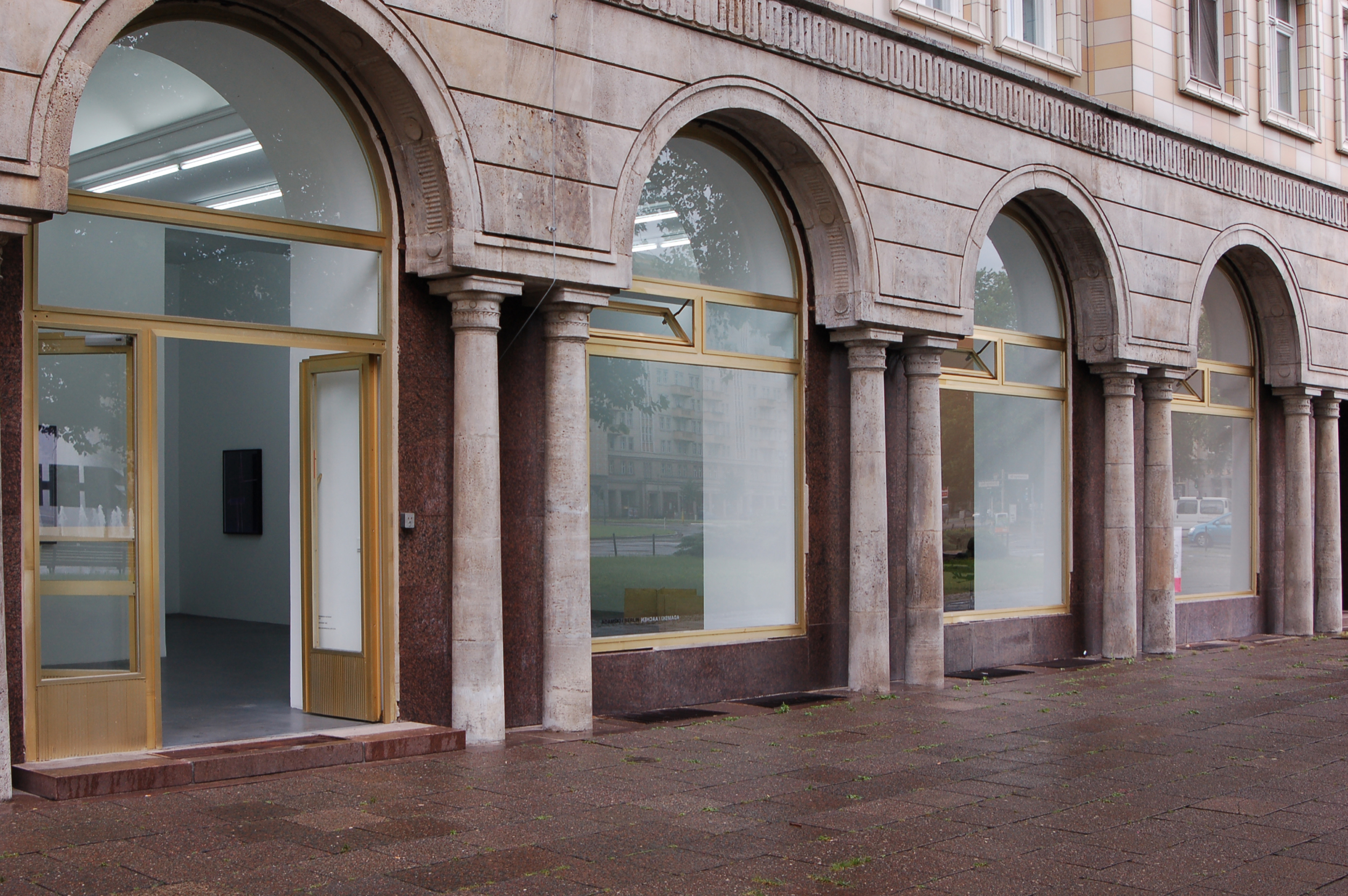
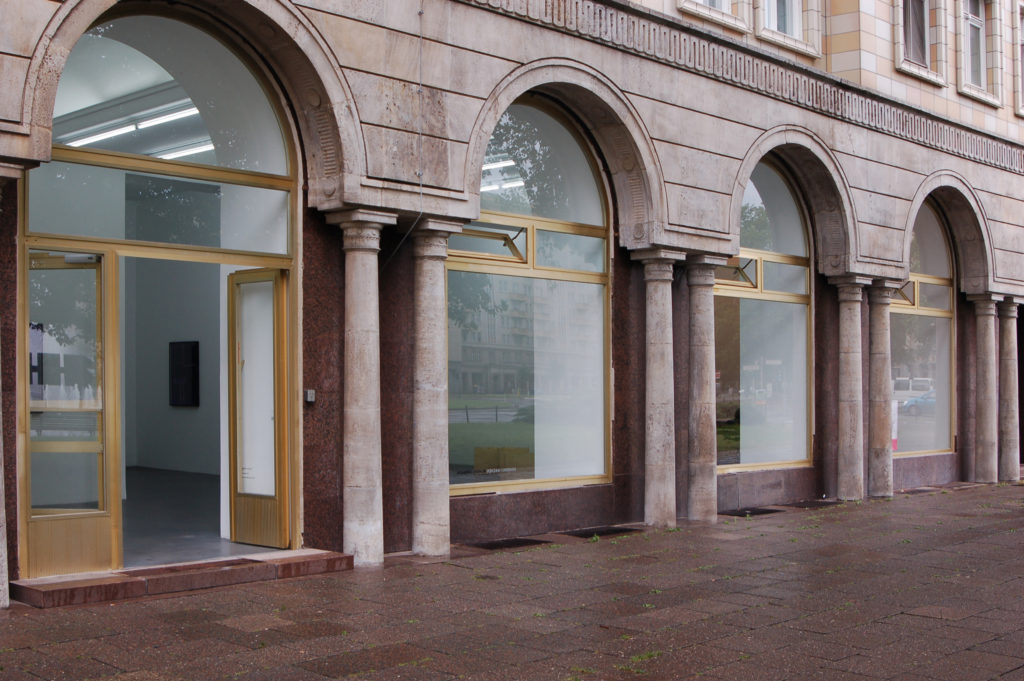
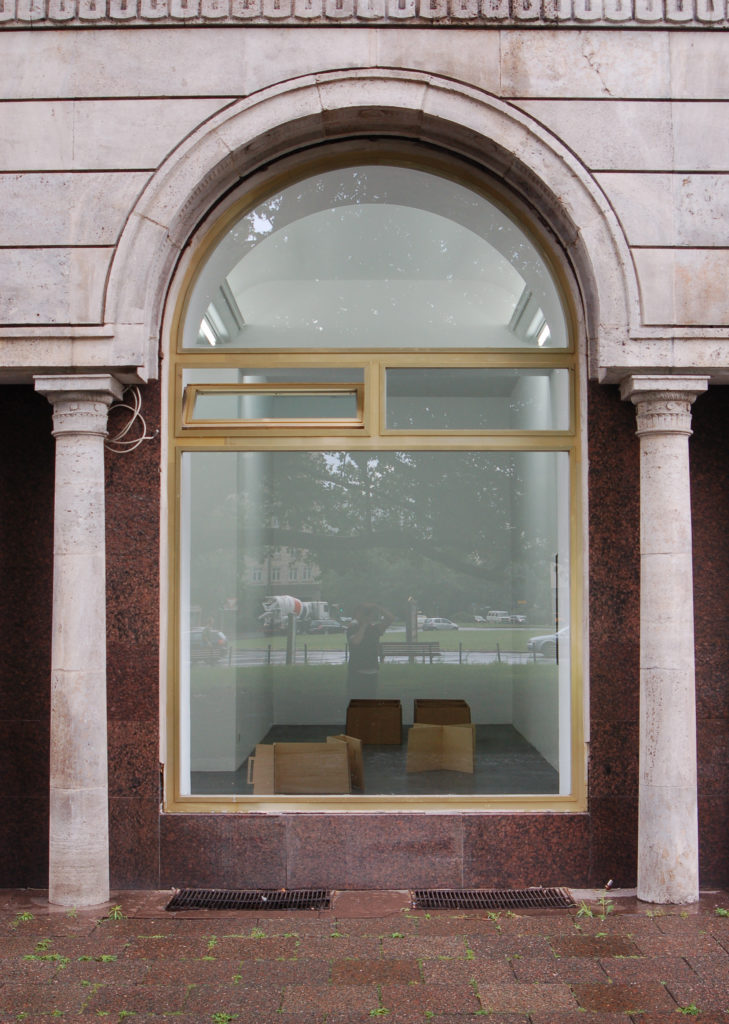
House Beautiful took its title from the American architectural magazine published by Hearst. The April 1953 issue set out the design and lifestyle principles of “The New America,” an overt critique of international modernism. Adamski Gallery in Berlin occupied a building completed the same year by Hermann Henselmann, whose commitment to modernism was concealed beneath the Stalinist neoclassical façades demanded of state architecture in the emerging DDR. The exhibition took advantage of the gallery’s two nearly symmetrical spaces to present two related groups of work built around inverted processes of production within this shared architectural and historical frame.
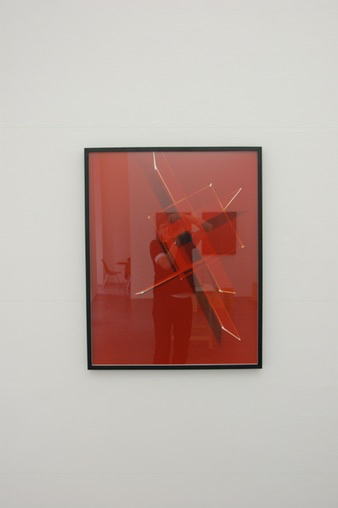
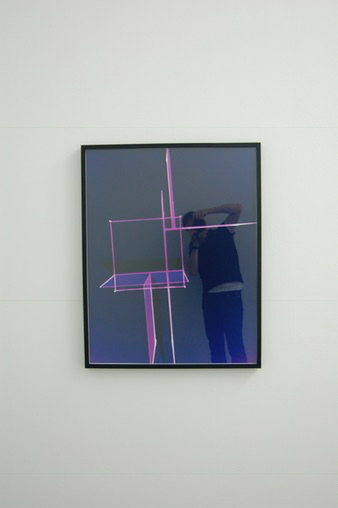
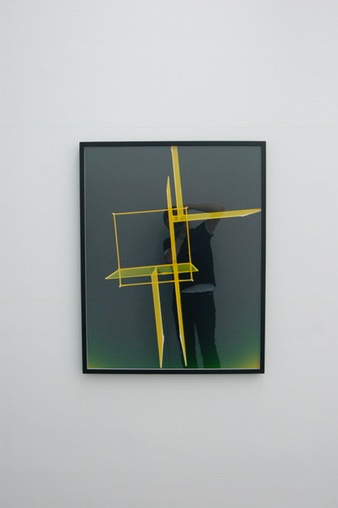
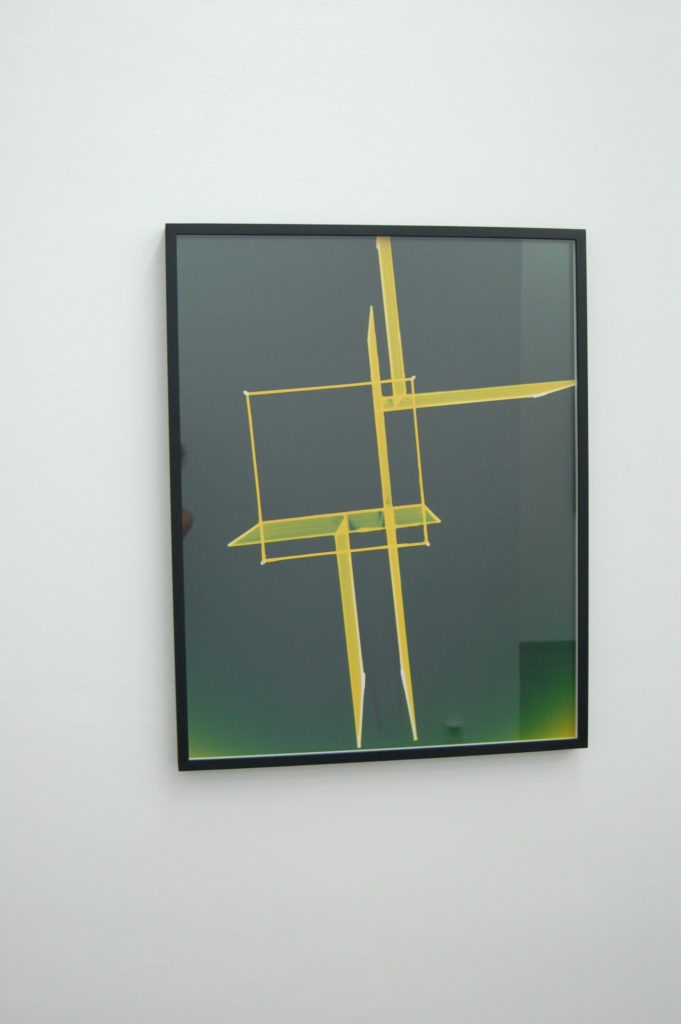
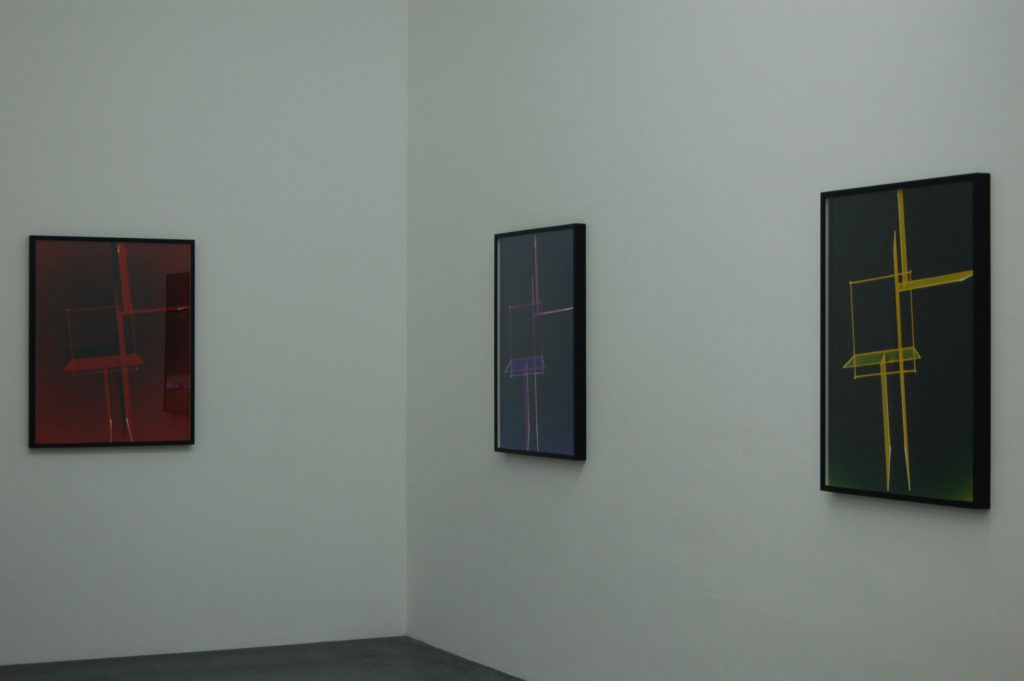
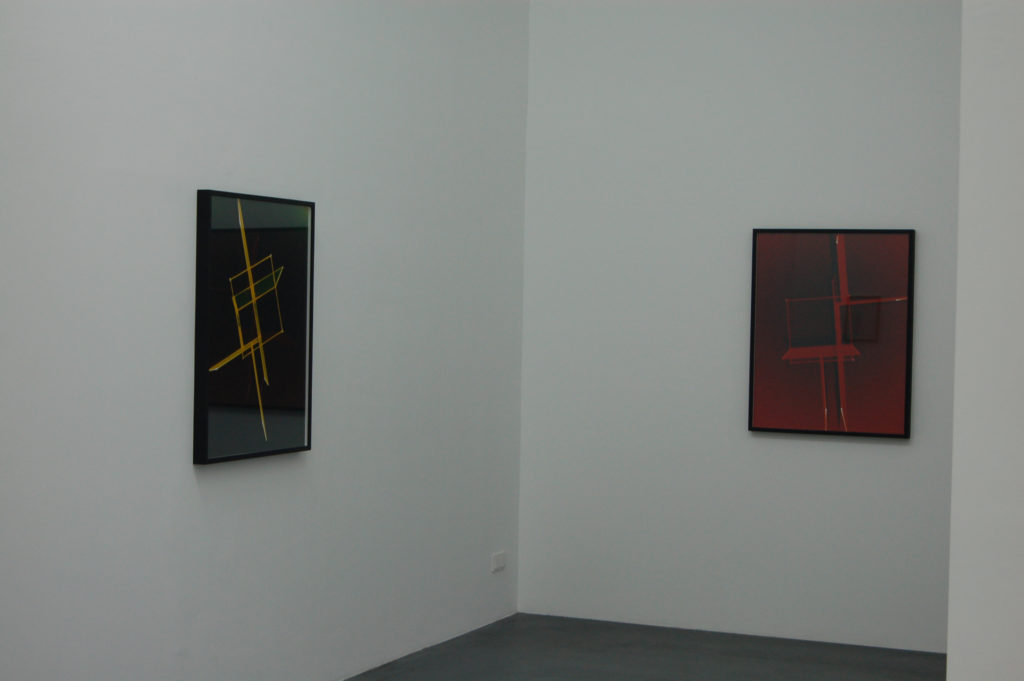
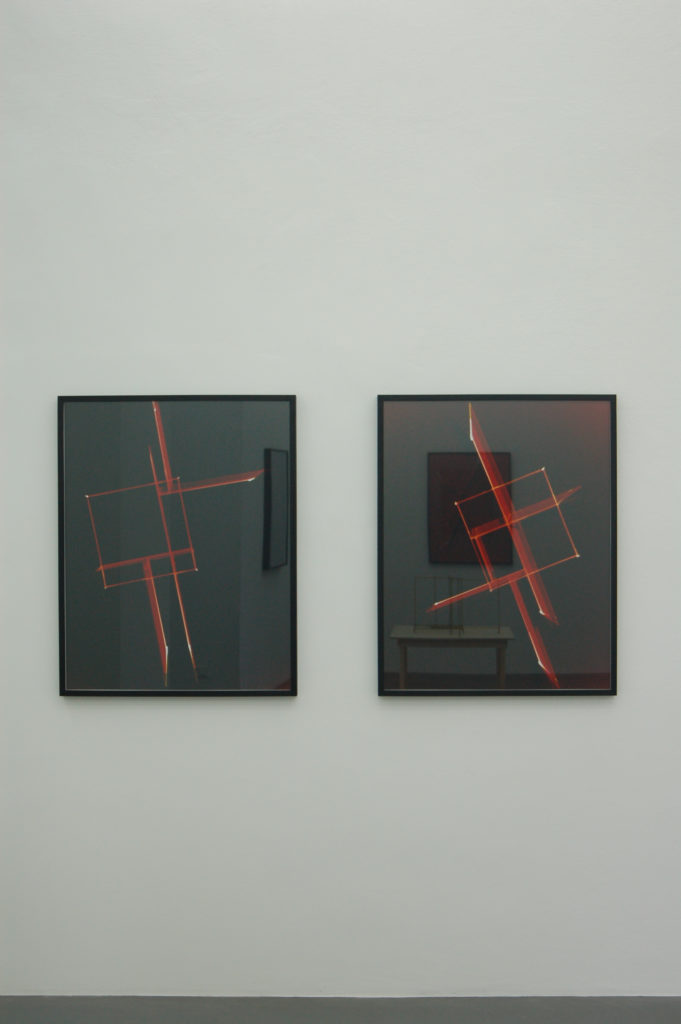
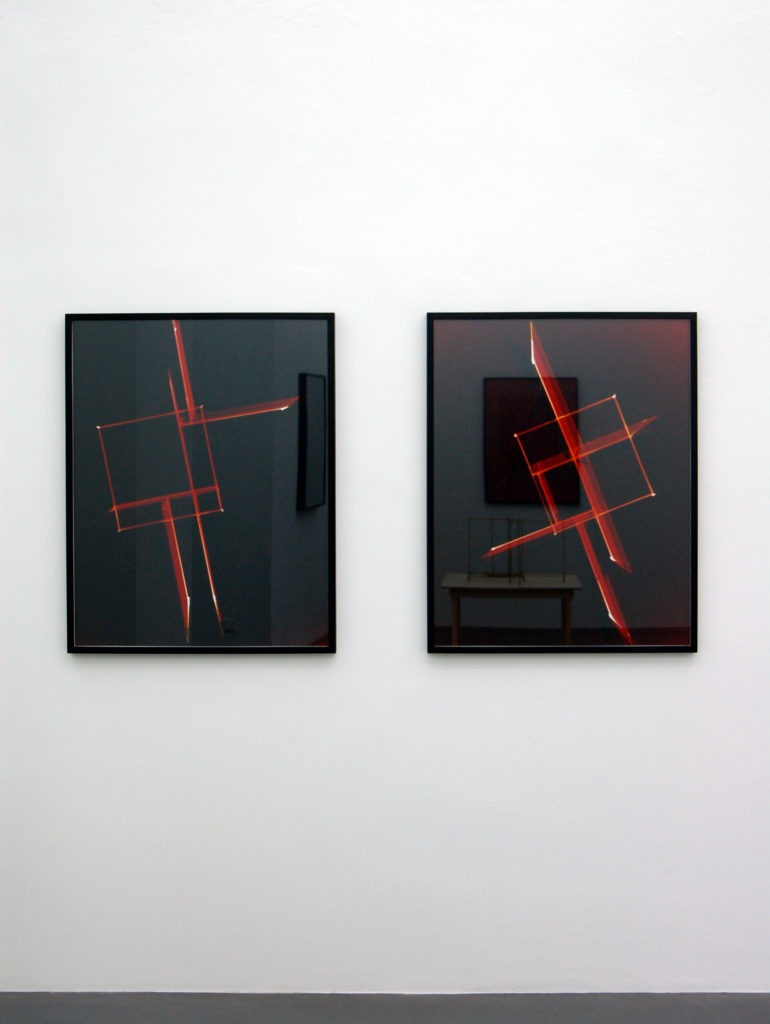
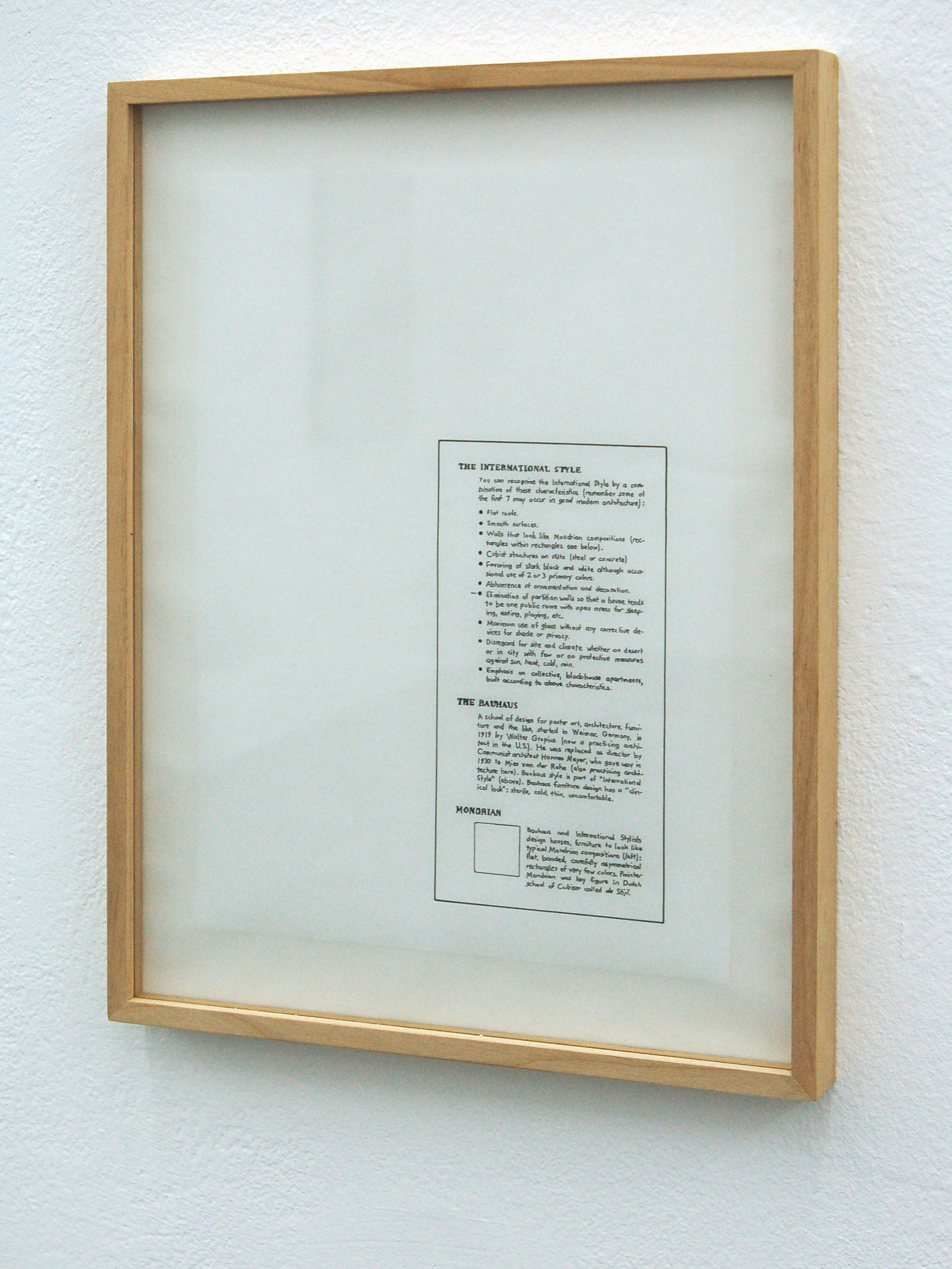
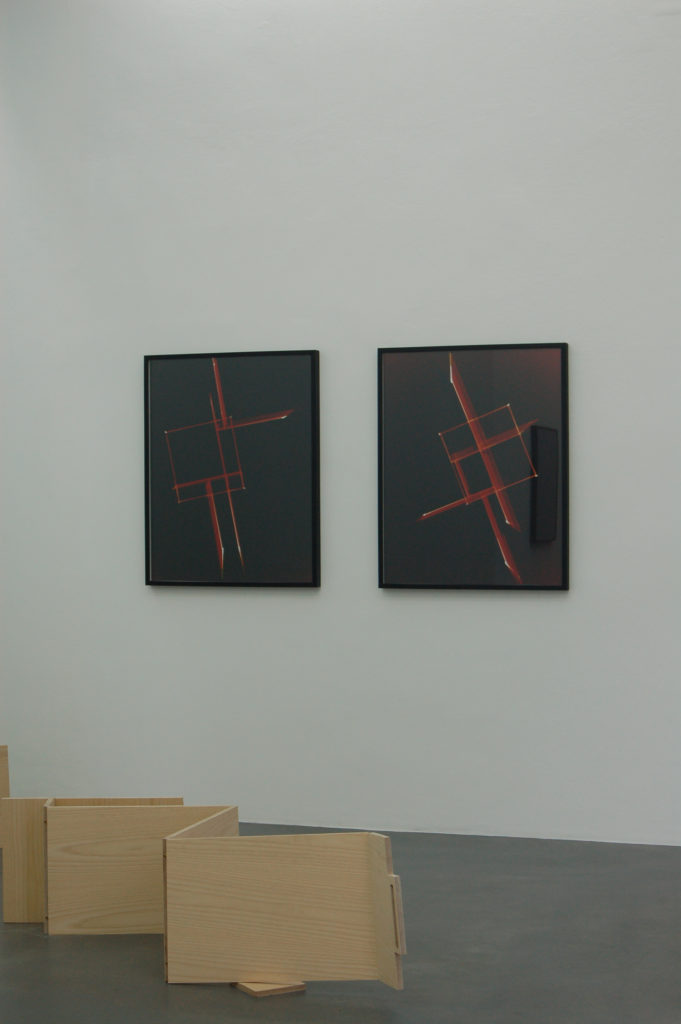
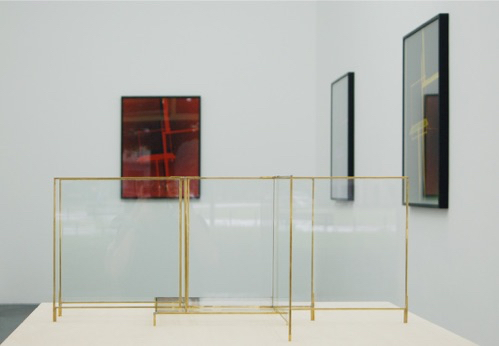
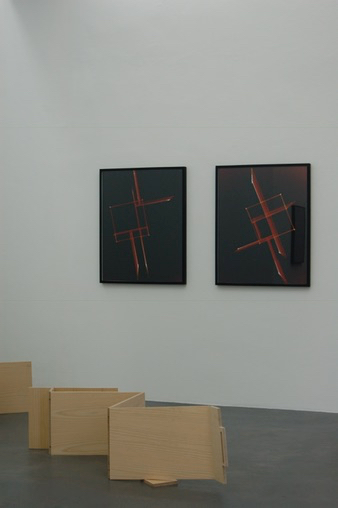
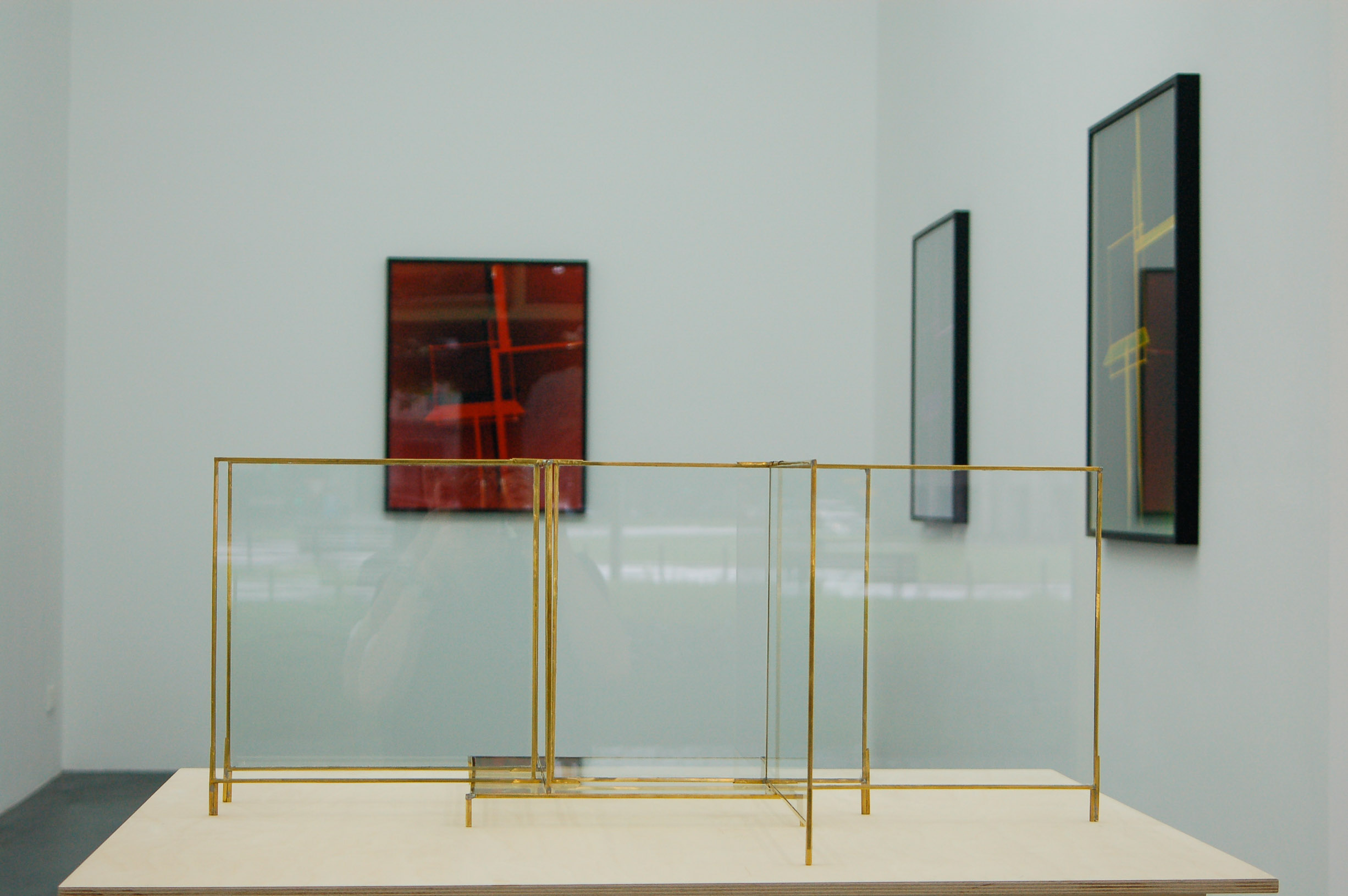
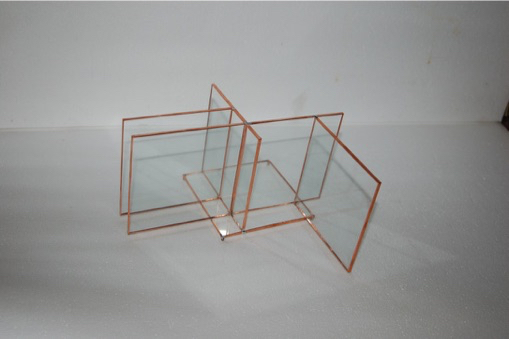
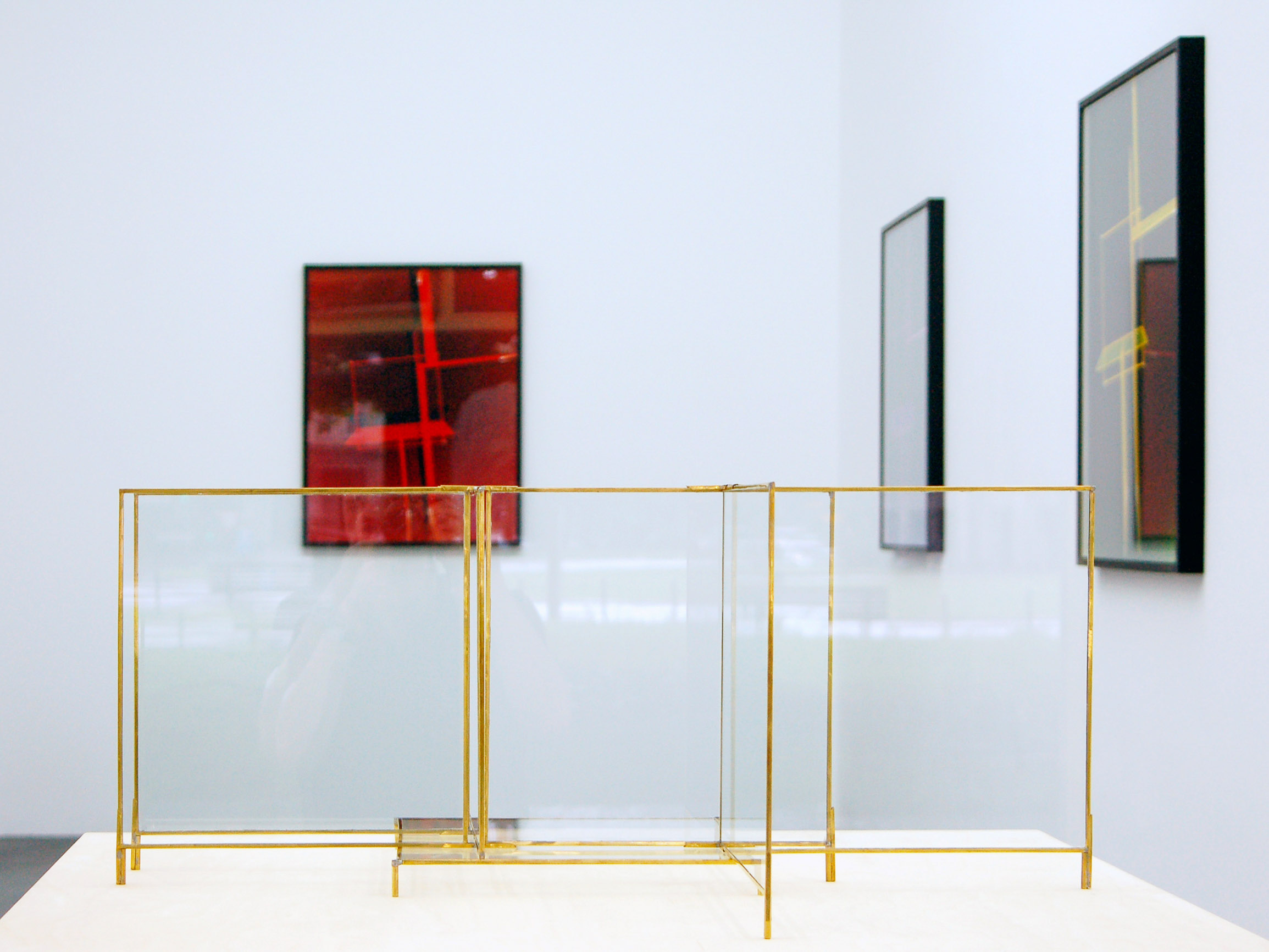
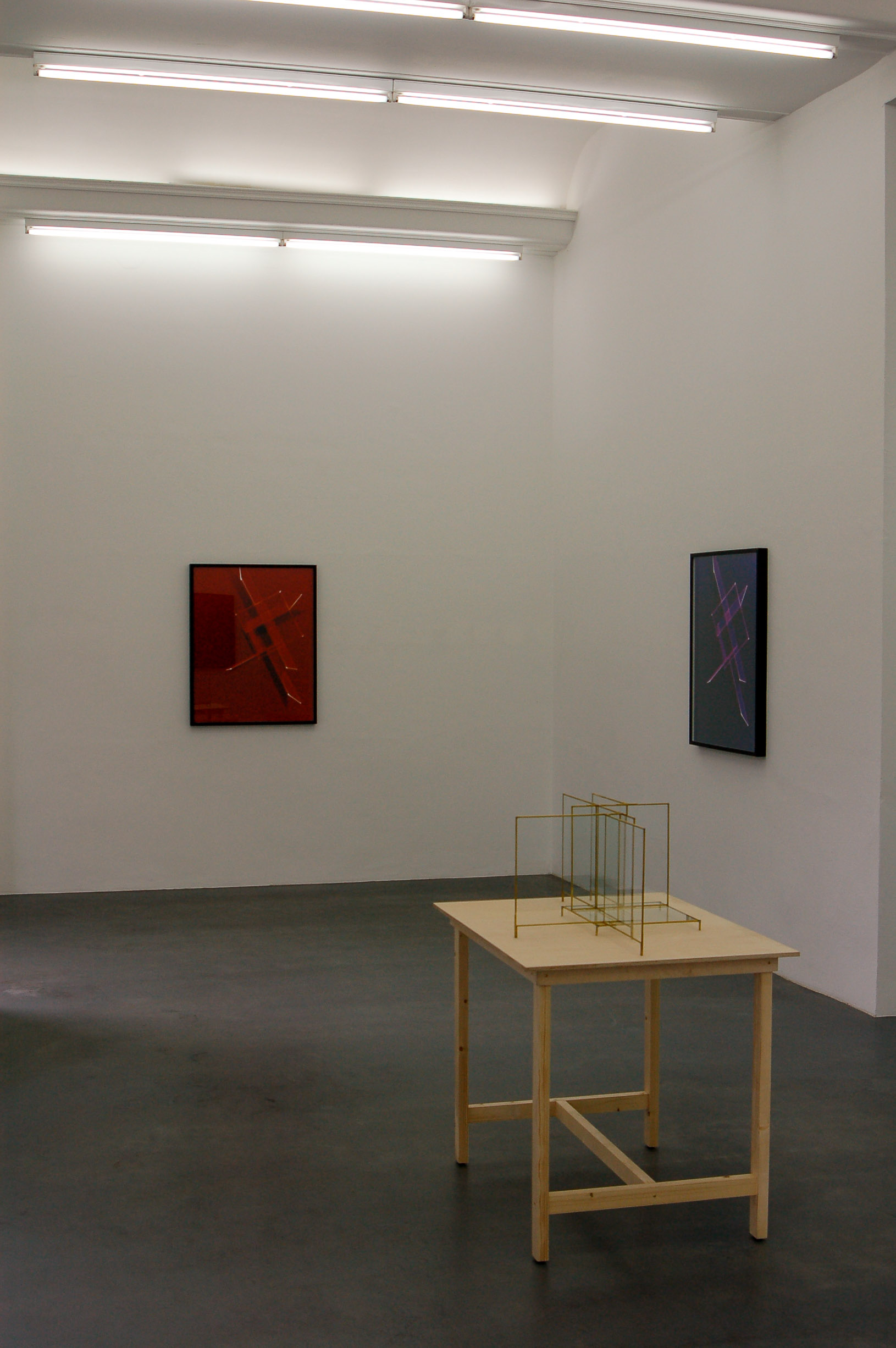
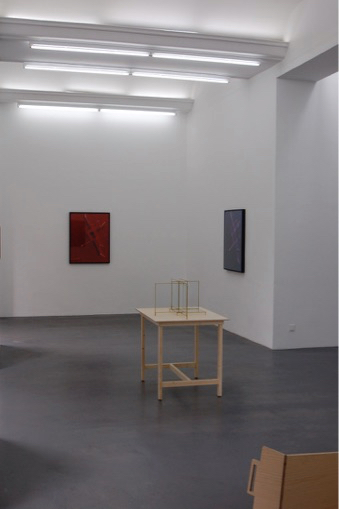
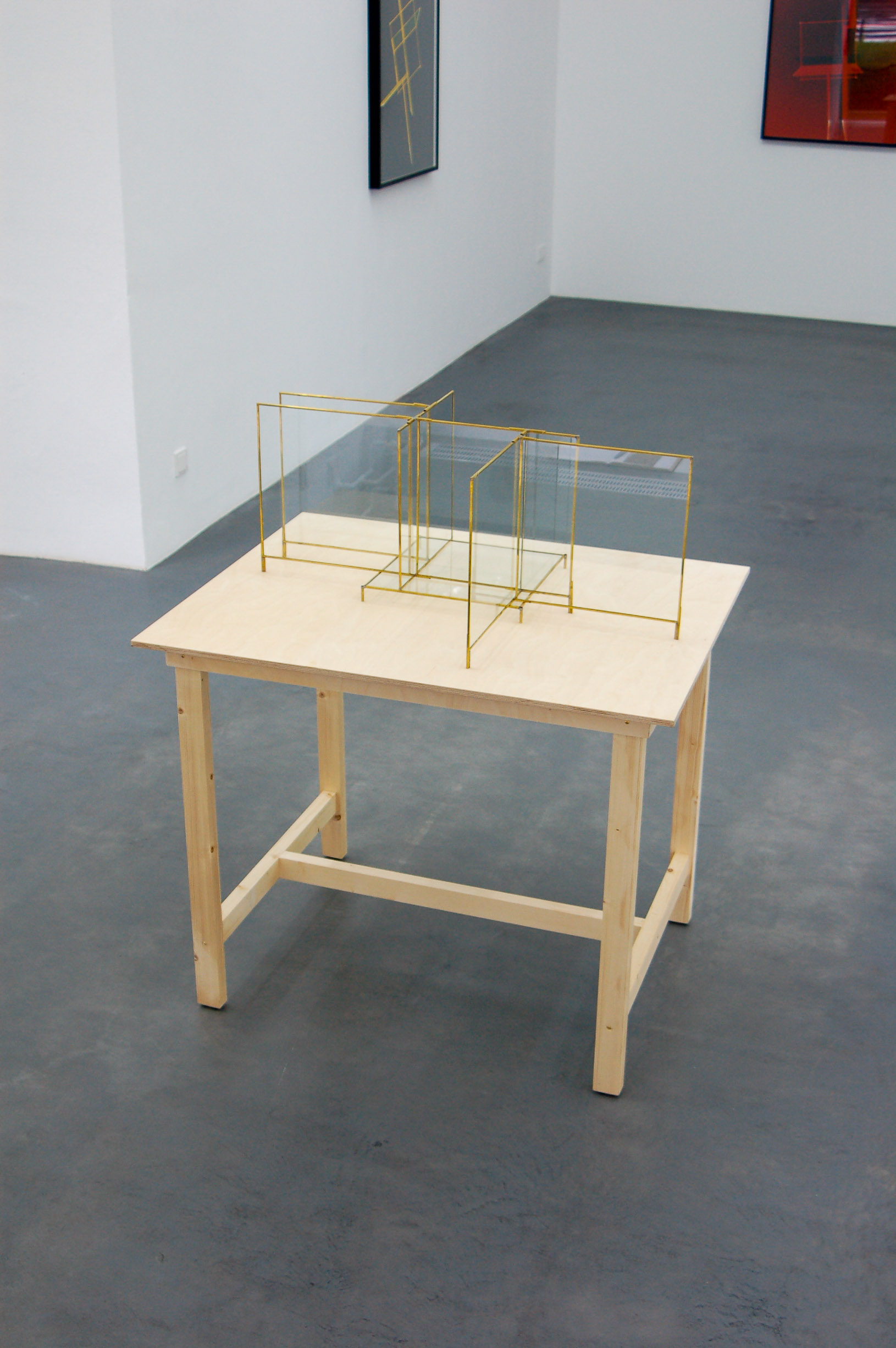
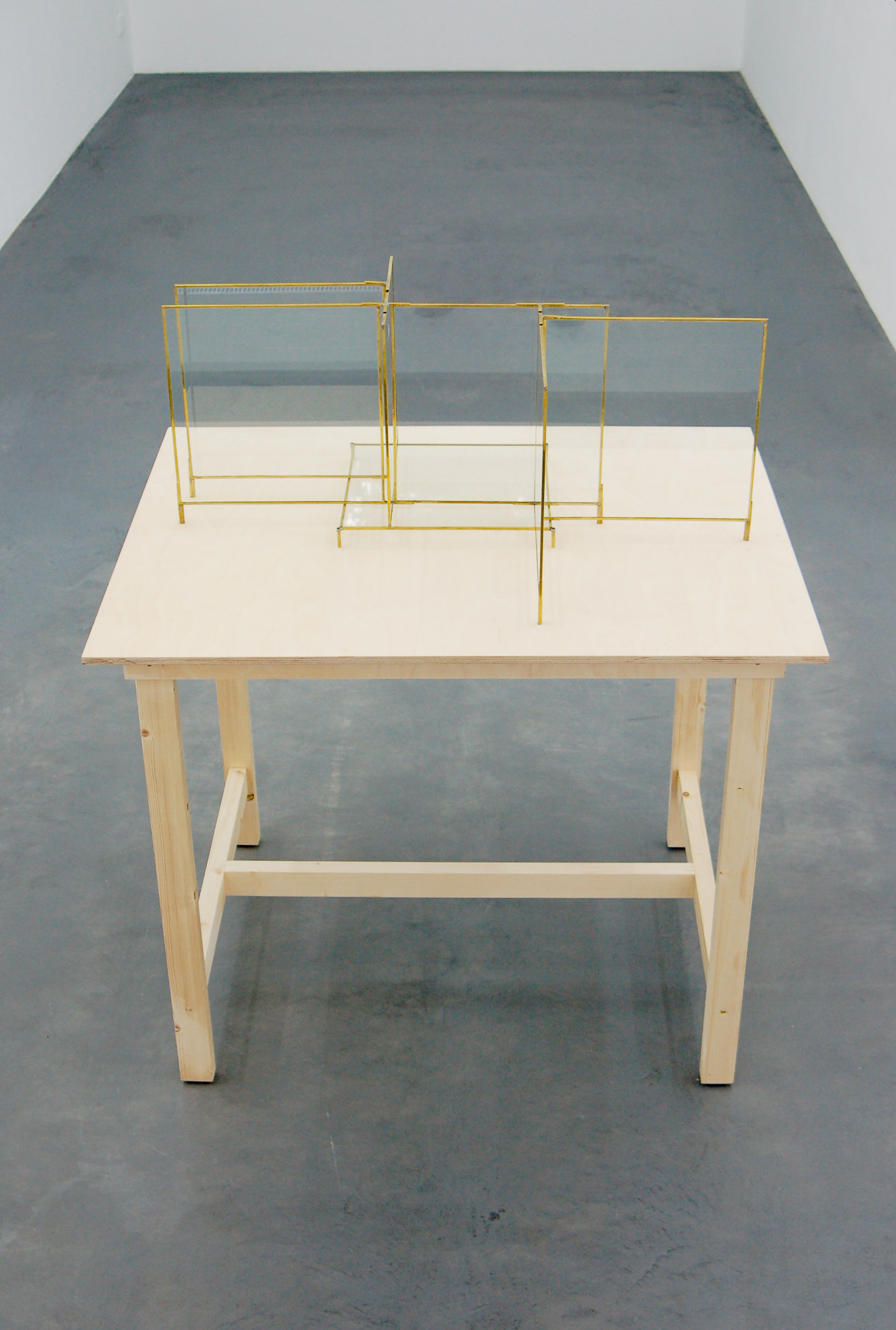
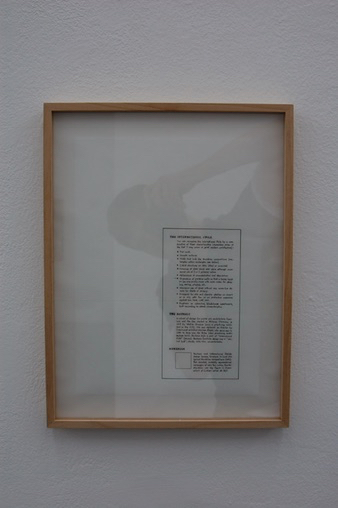
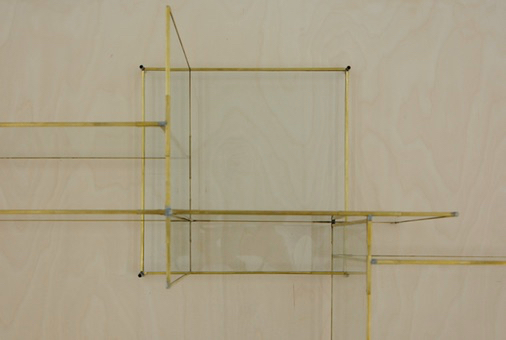
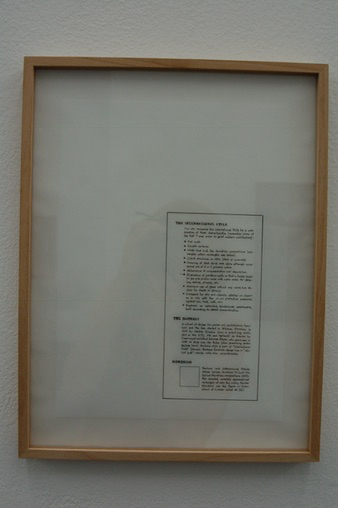
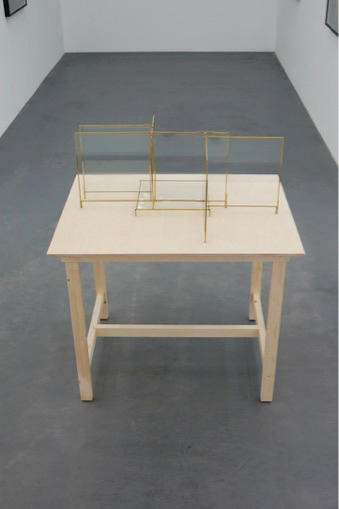
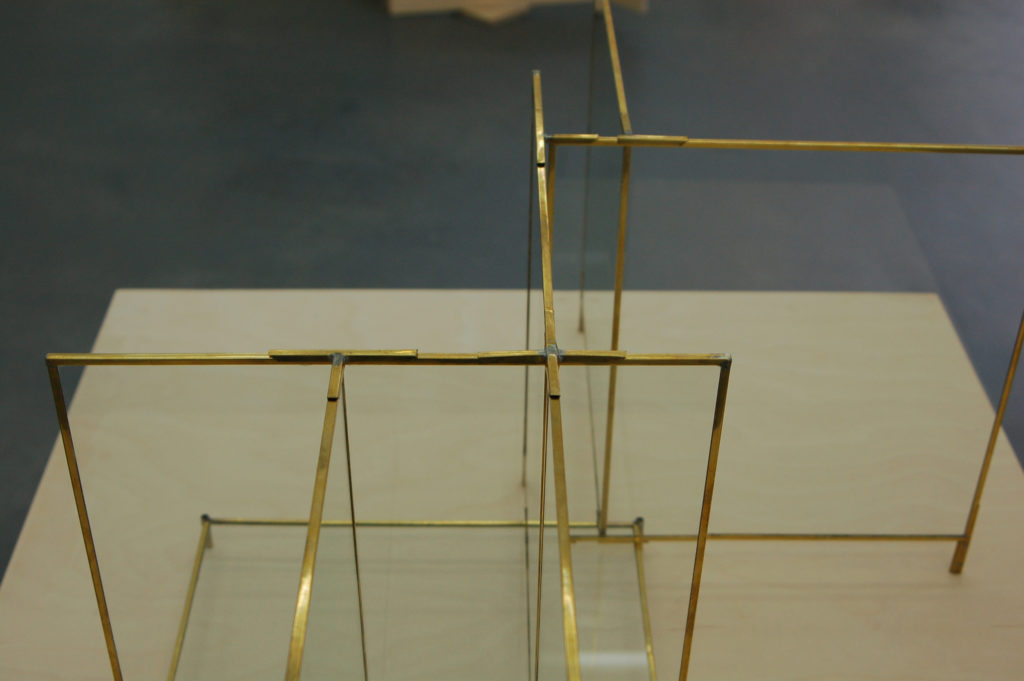
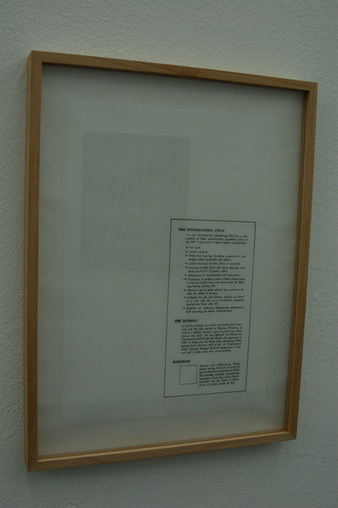
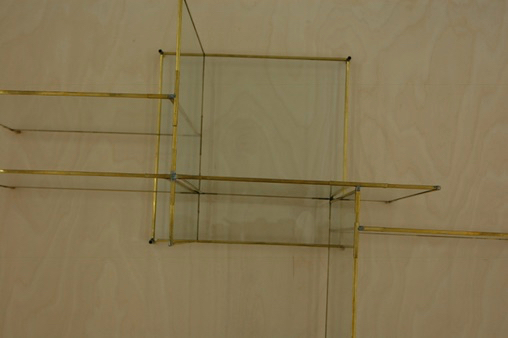
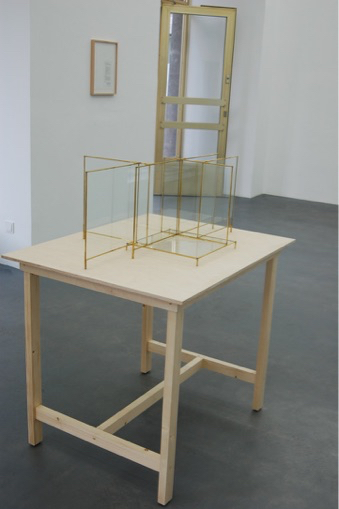
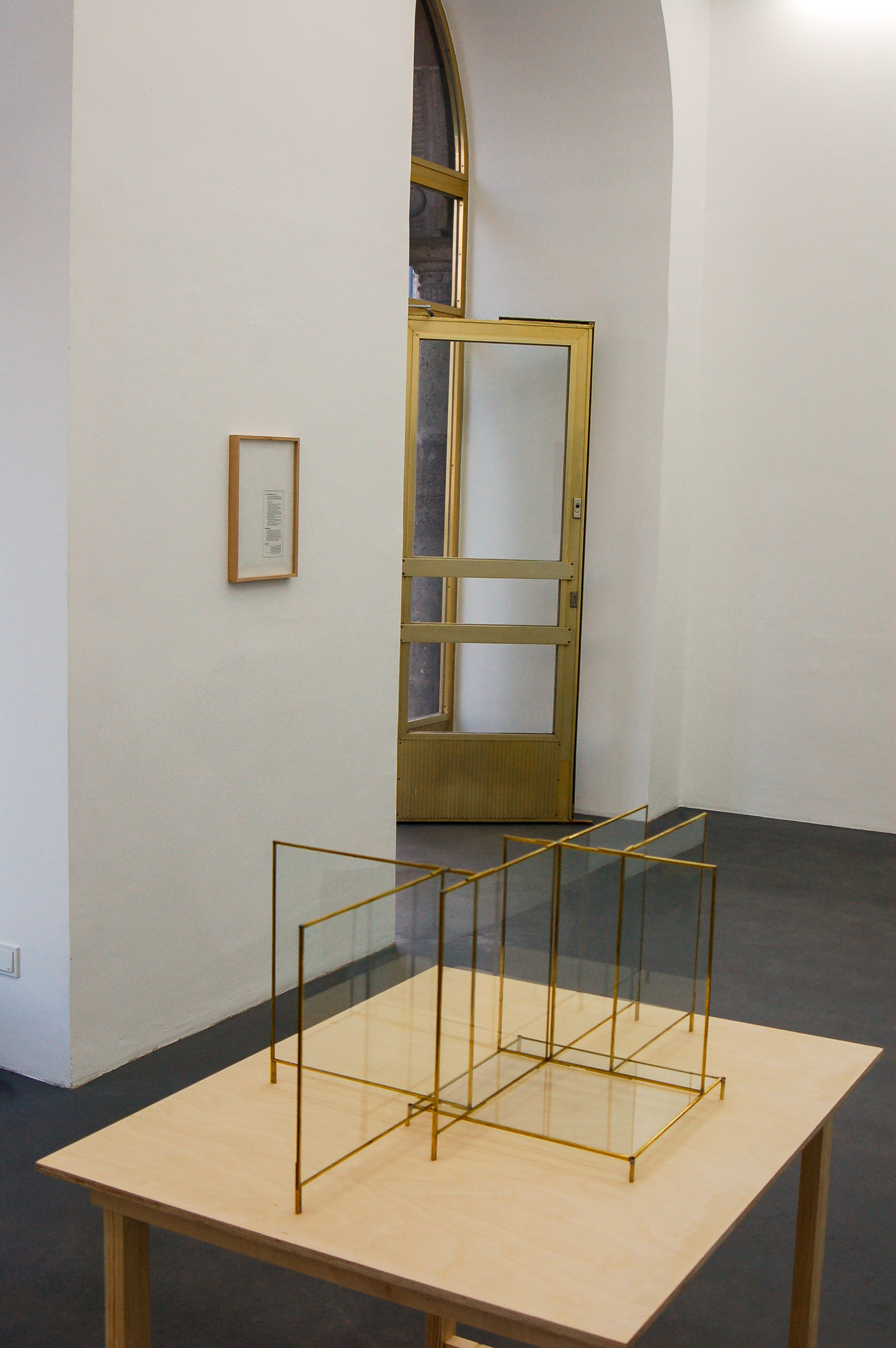
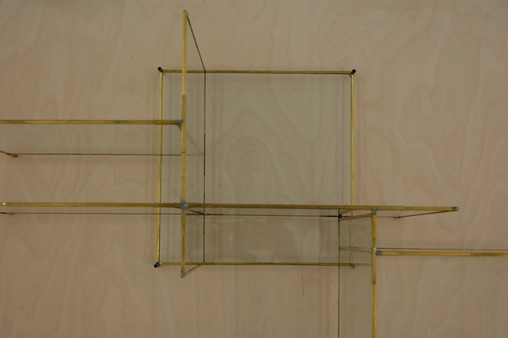
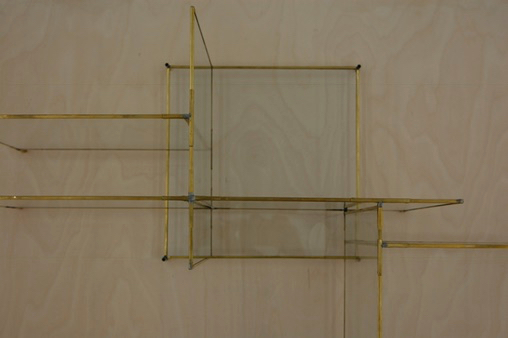
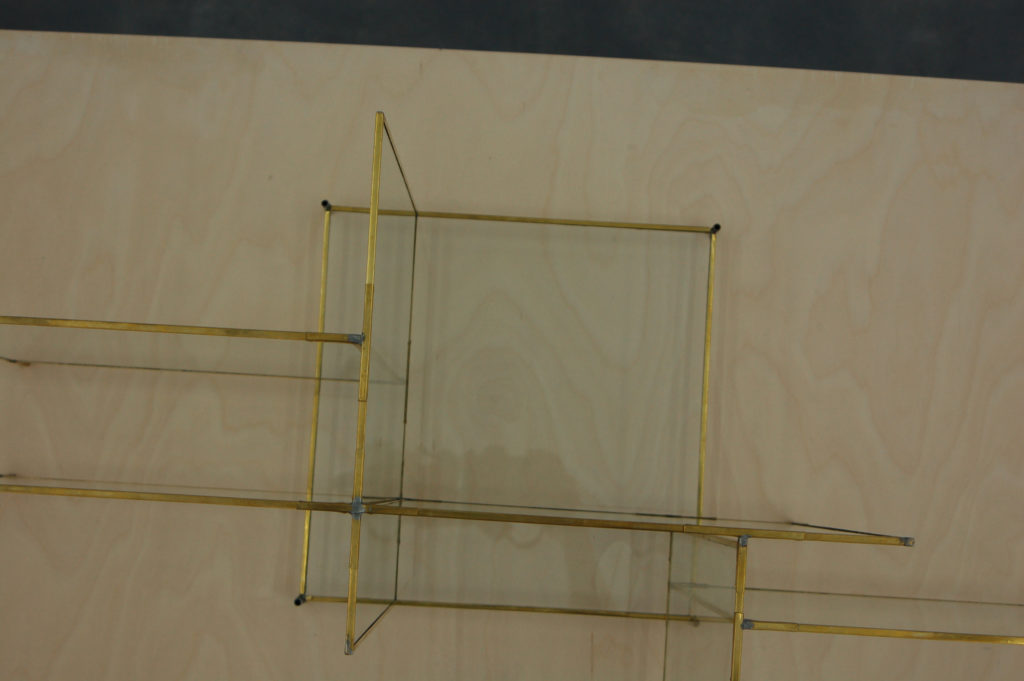
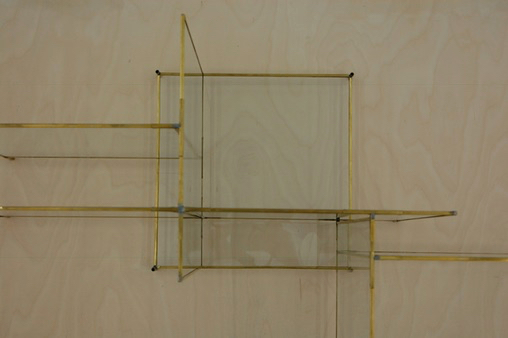
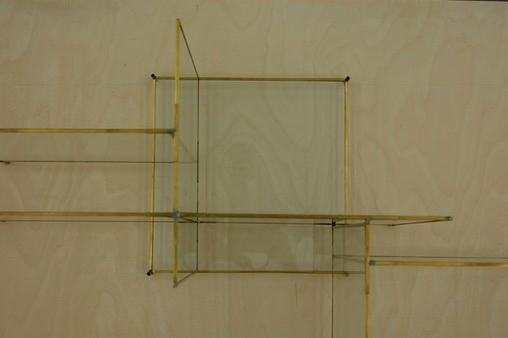
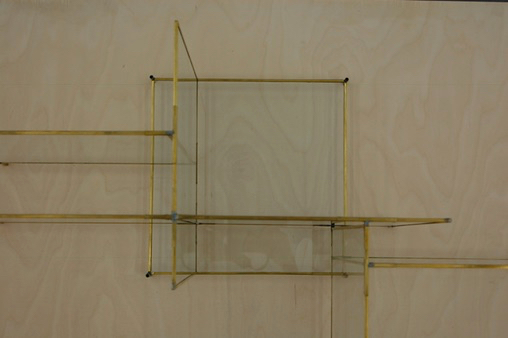
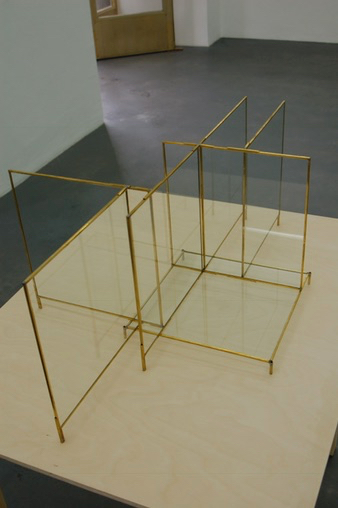
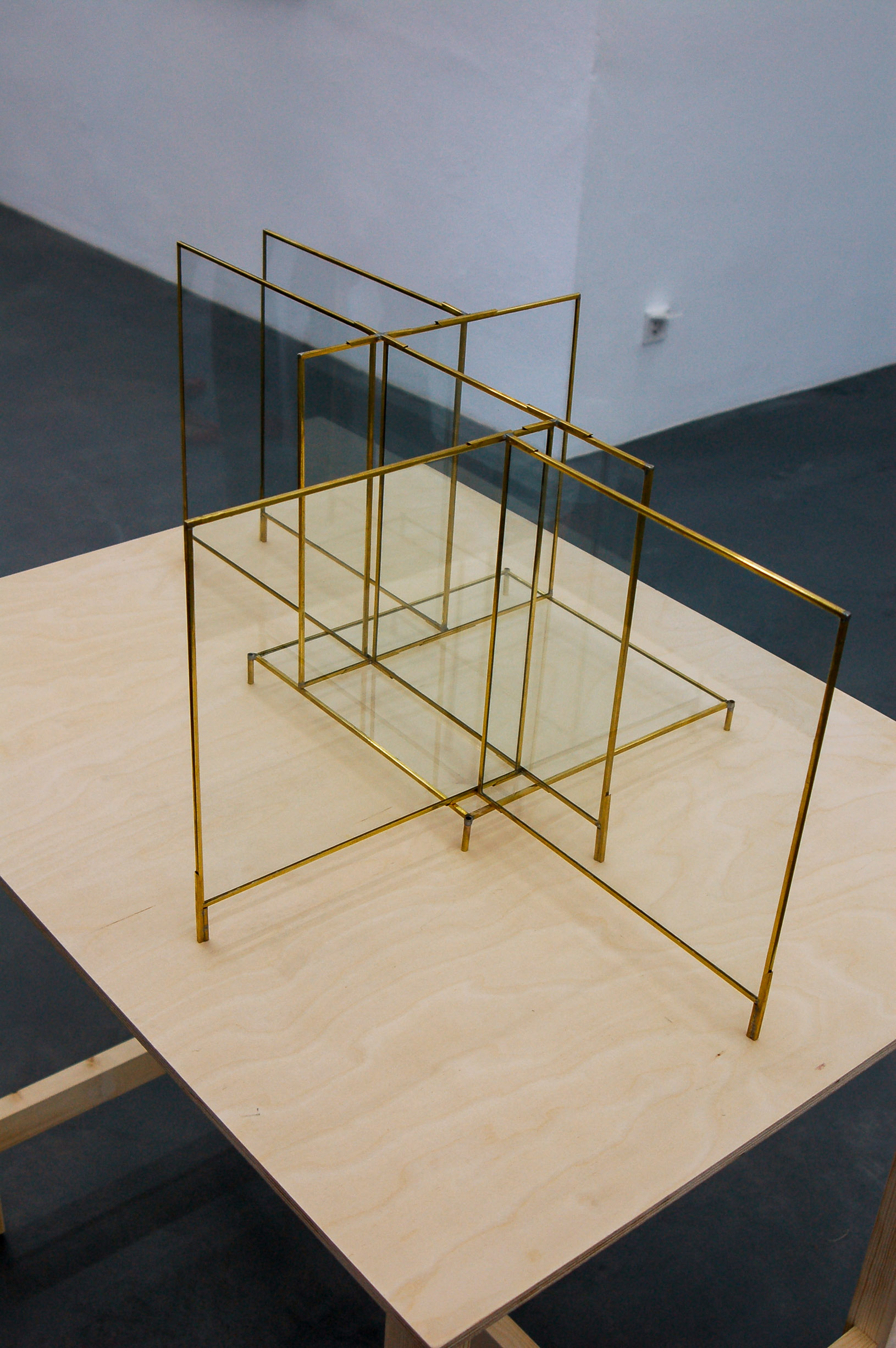
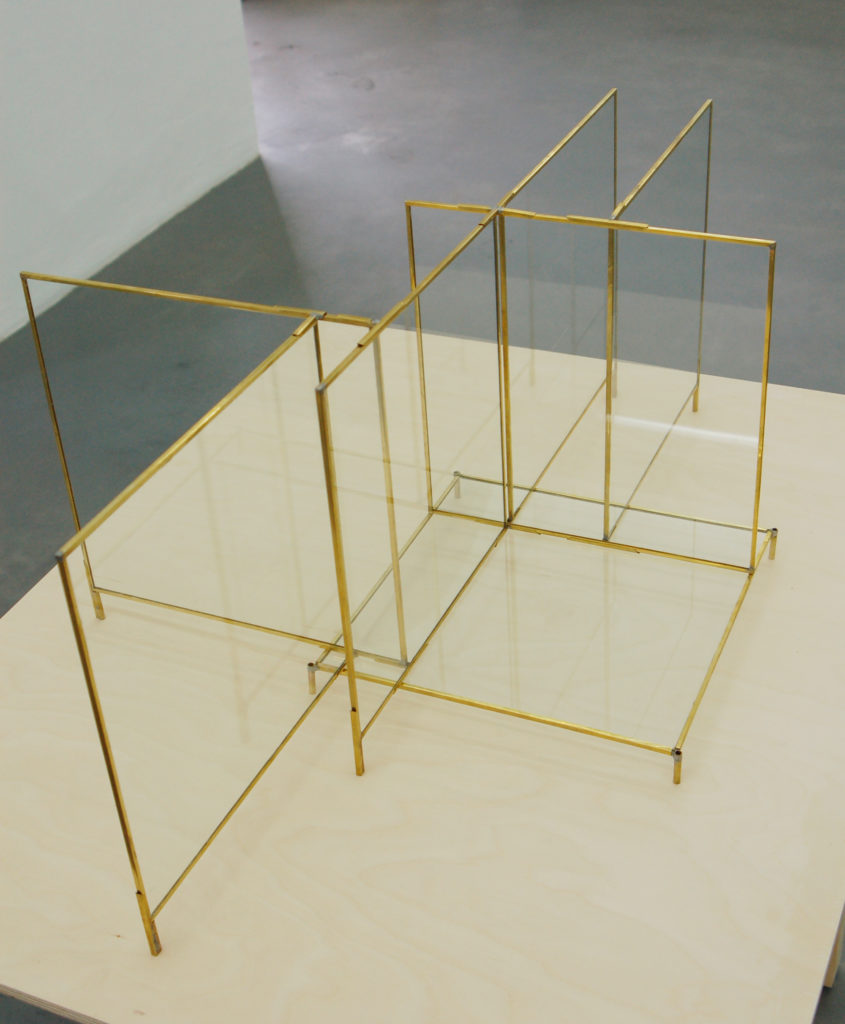
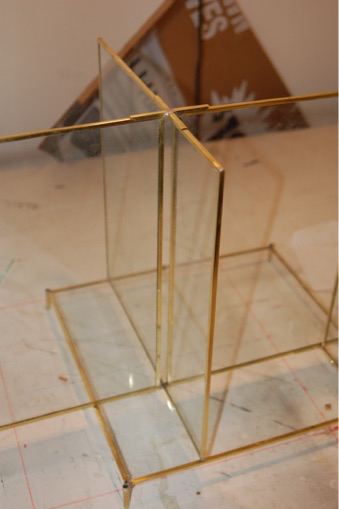
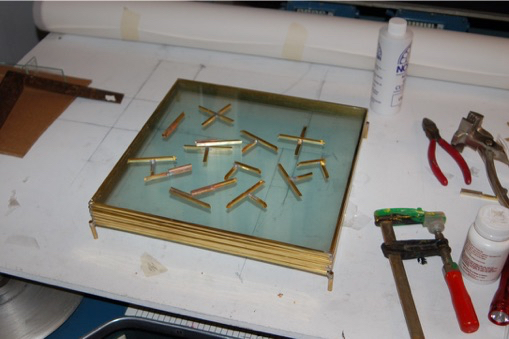
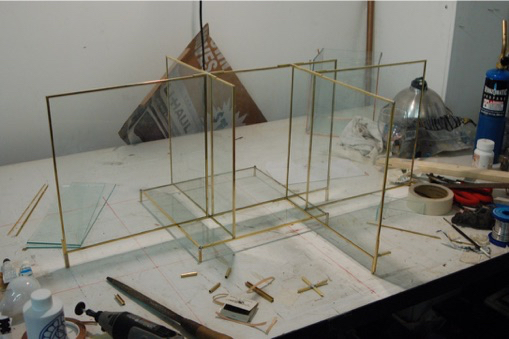
In the first space, a table held House Beautiful (brass and glass, 45 × 38 × 30 in.), a model, tool, and sculpture consisting of nine brass-framed glass panels whose modular arrangement permits the reconstruction of the eight perfectly square compositions painted by Piet Mondrian. The sculpture functioned as a tool for producing a series of unique color photograms using multiple filtered exposures on color photographic paper. Each photogram is titled after the Mondrian composition it models and the filters used in its exposure. These were accompanied by a pen-and-ink tracing of Elizabeth Gordon’s 1953 editorial, “The Threat to the Next America,” in which “walls that look like Mondrian compositions” were presented as evidence of the perceived dangers of the International Style.
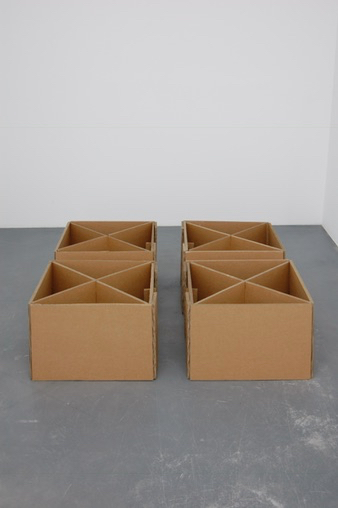
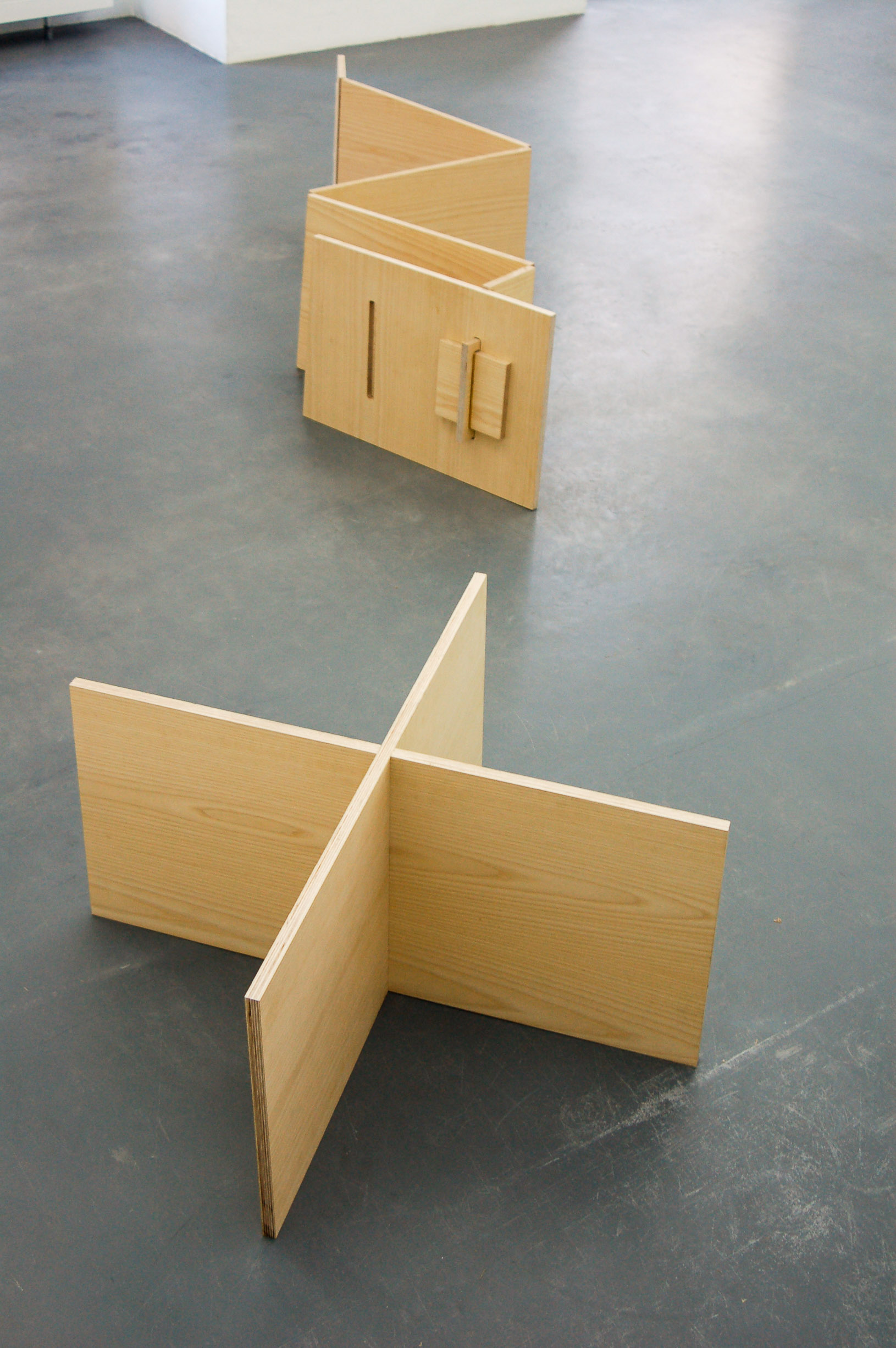
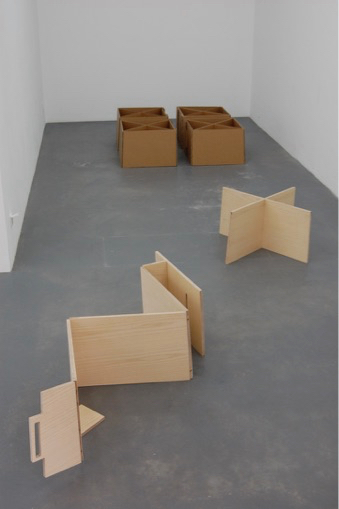
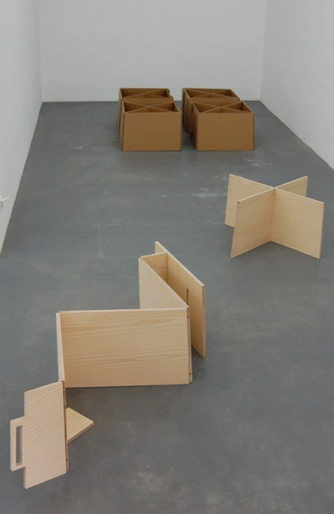
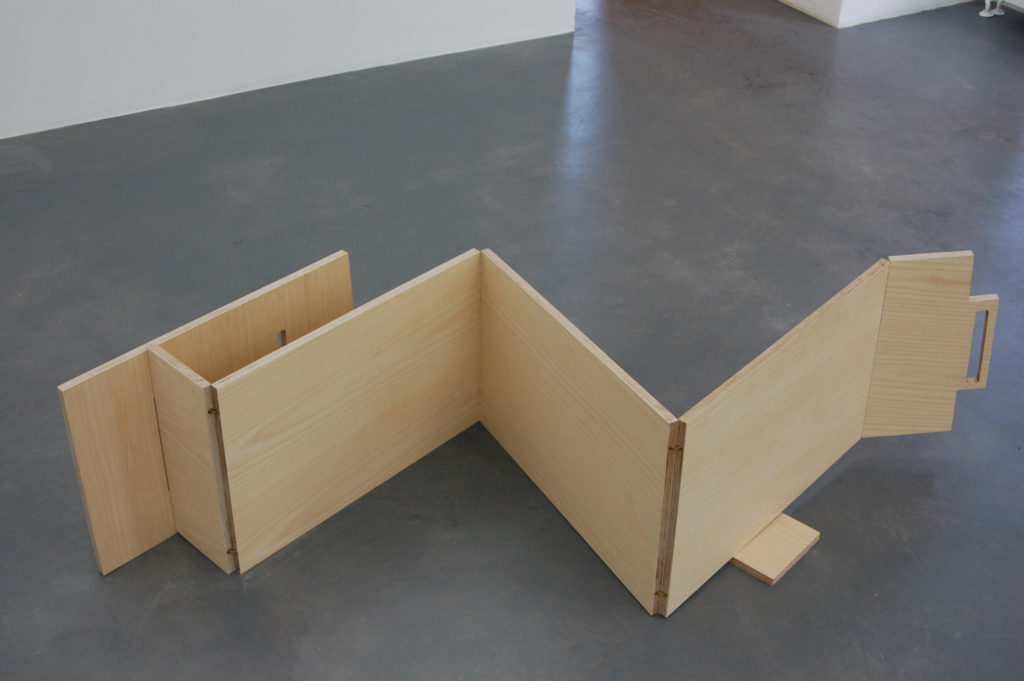
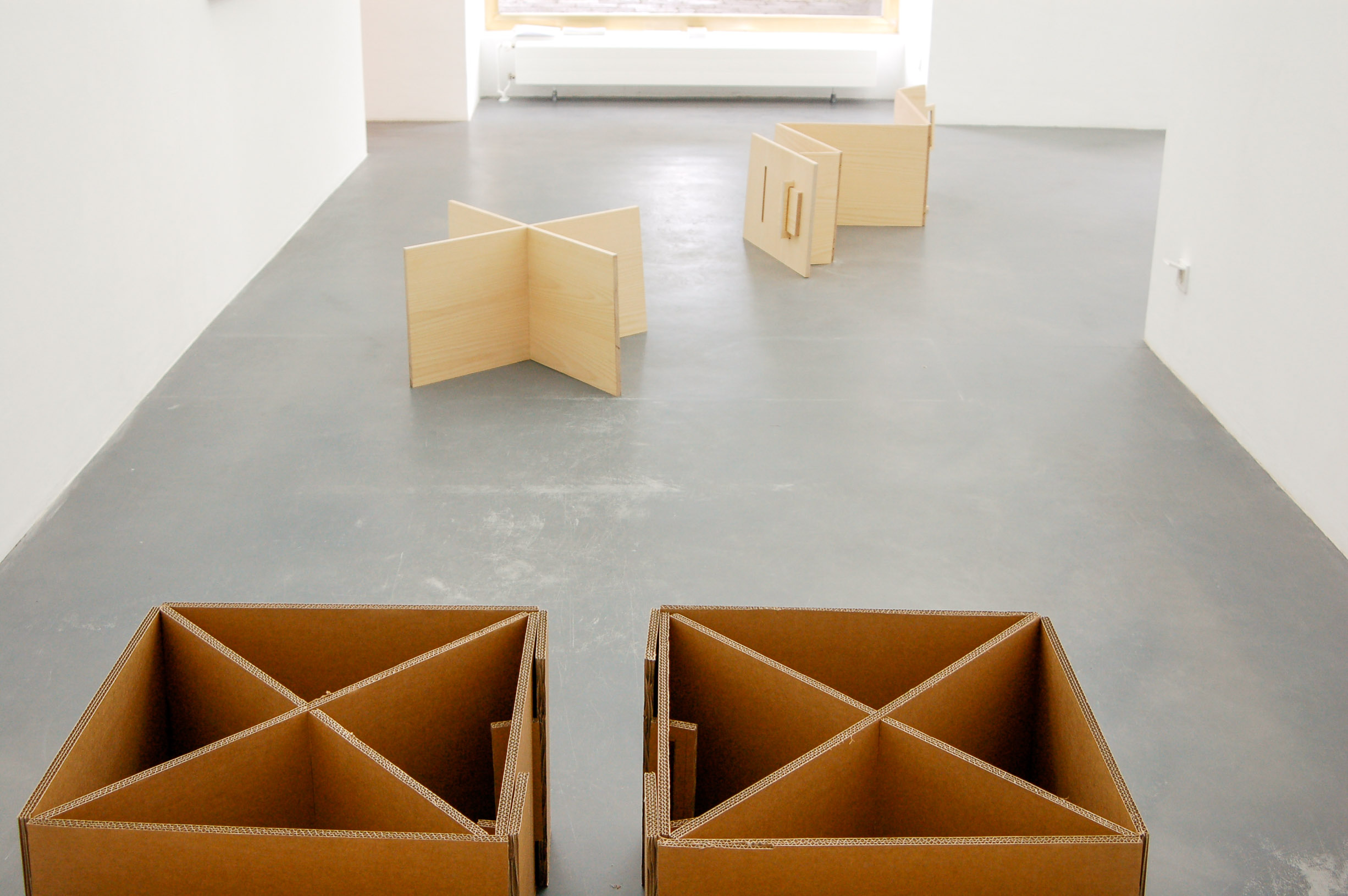
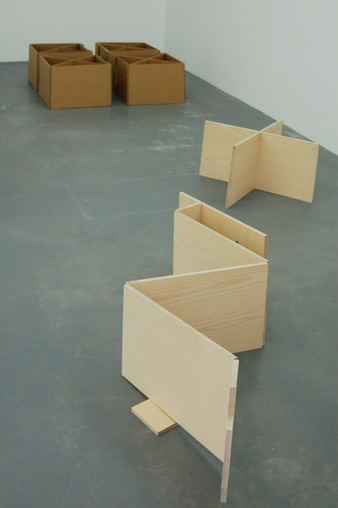
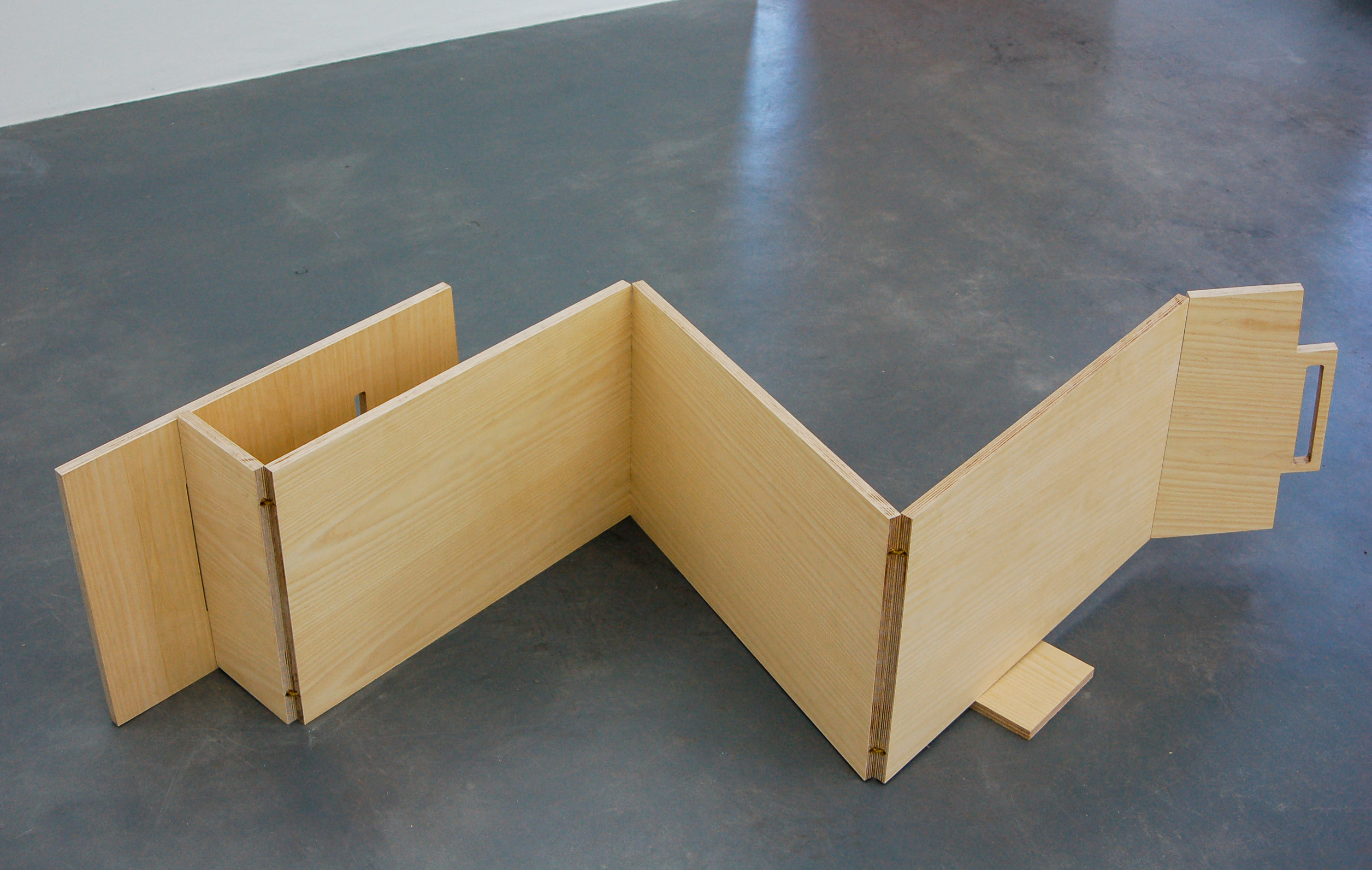
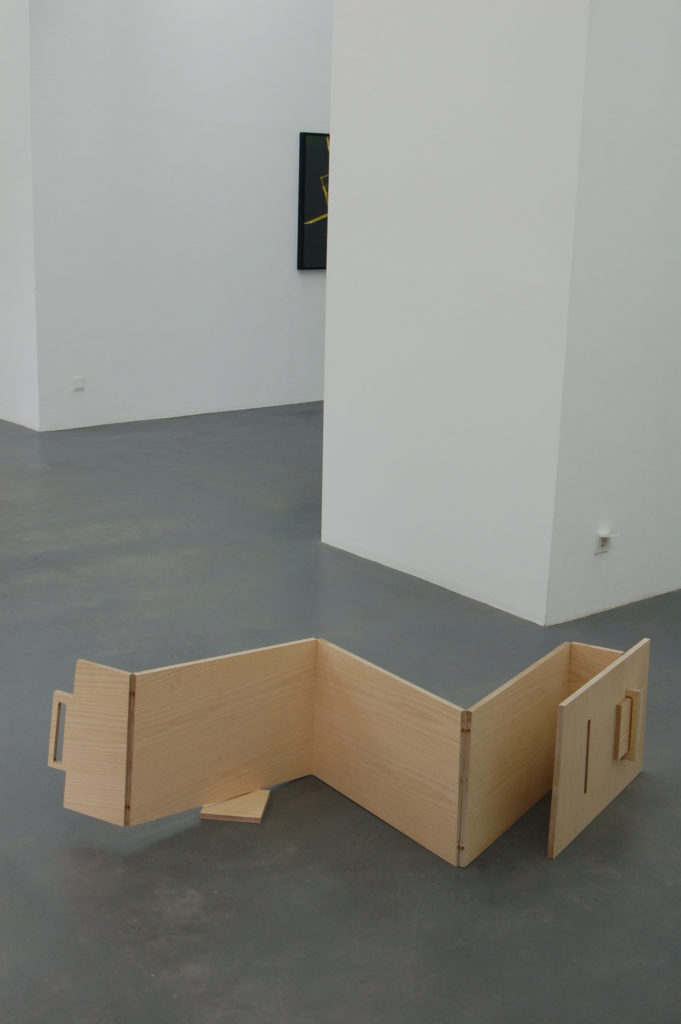
The second group, Nomadic Morris, comprised a series of cardboard sculptures together with a hinged sculpture of ash-laminated plywood that served as the template for cutting the cardboard pieces. Each cardboard construction is a hybrid of an untitled 1967 Robert Morris sculpture and the “simplest support” from James Hennessey and Victor Papanek’s Nomadic Furniture (1973). Like House Beautiful, the plywood sculpture functioned as both tool and sculpture — the template from which the infinitely repeatable cardboard constructions were produced.