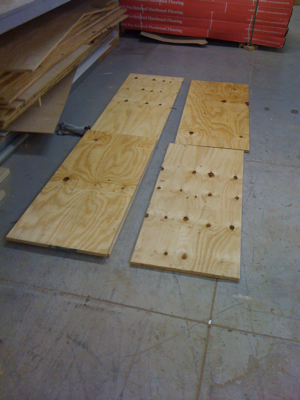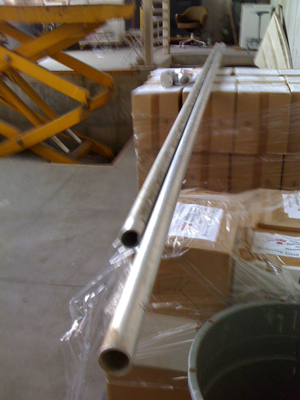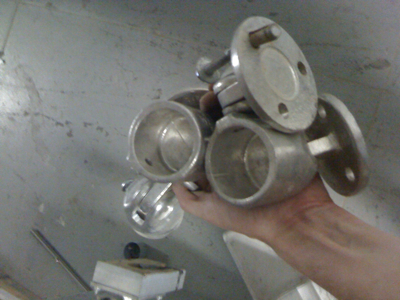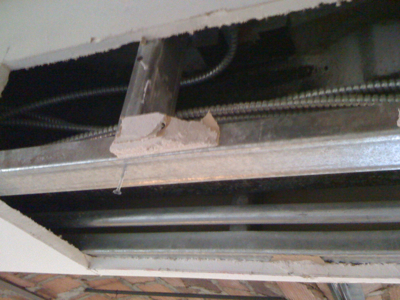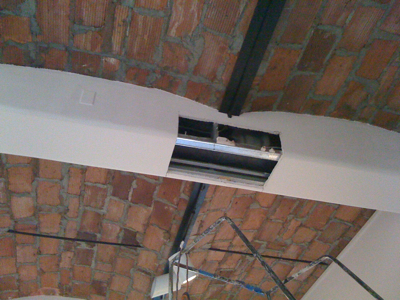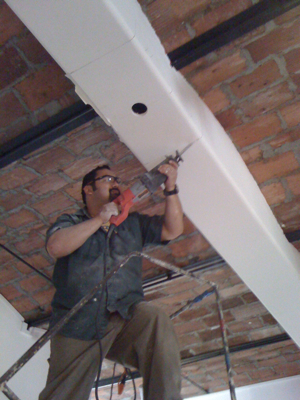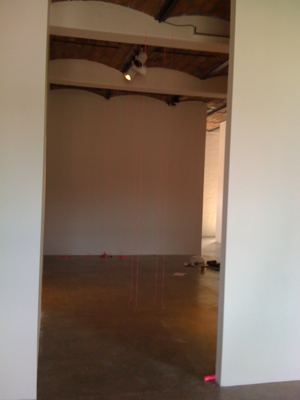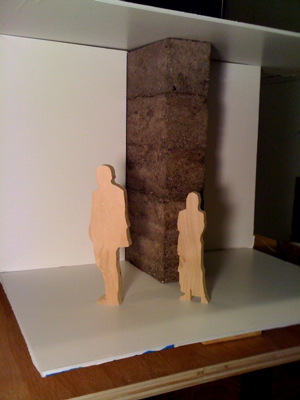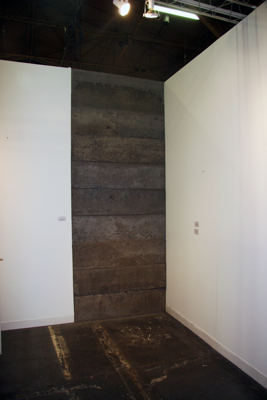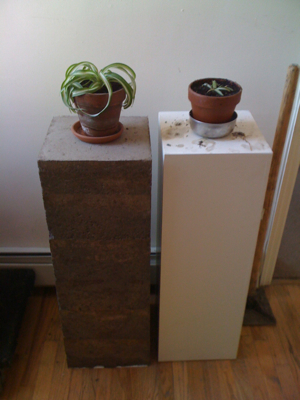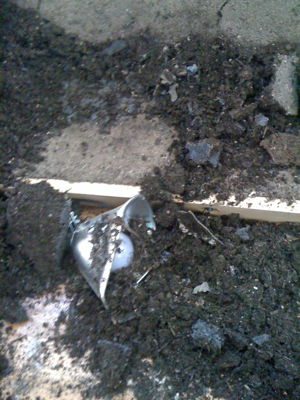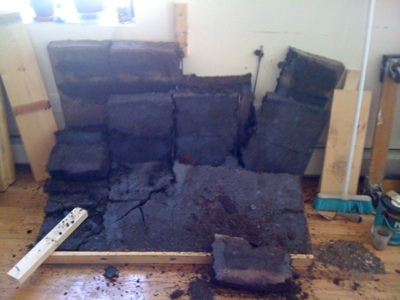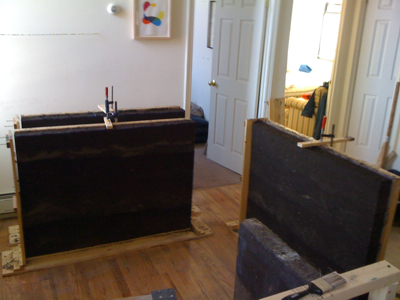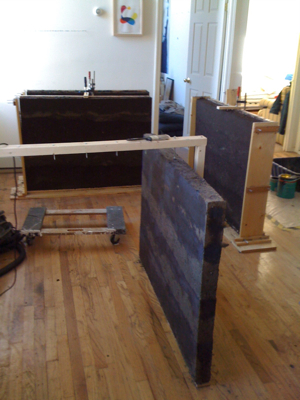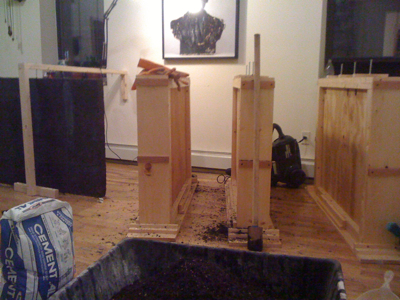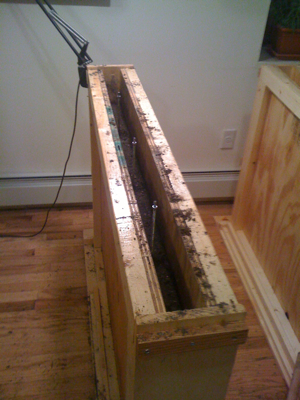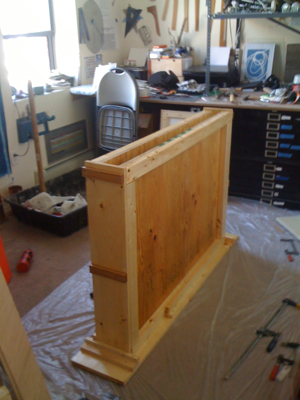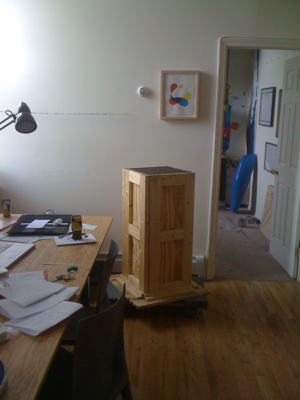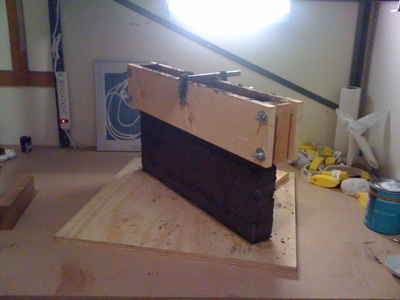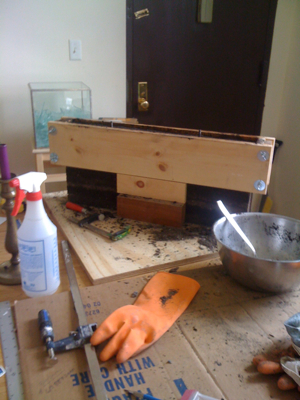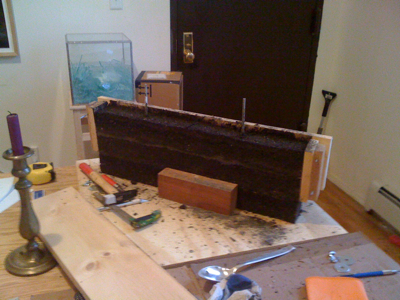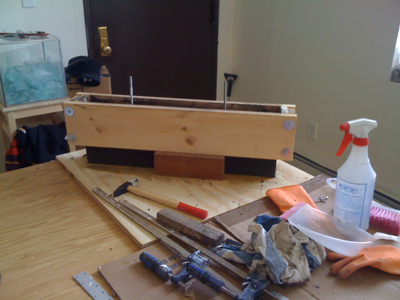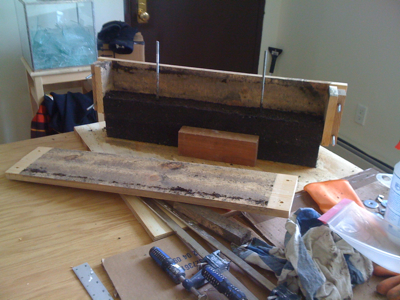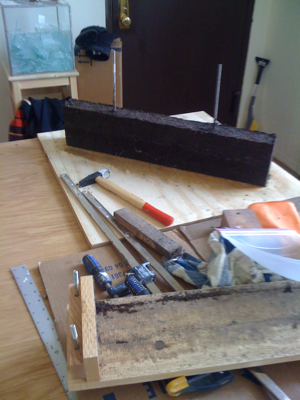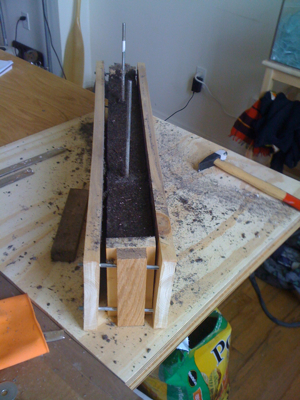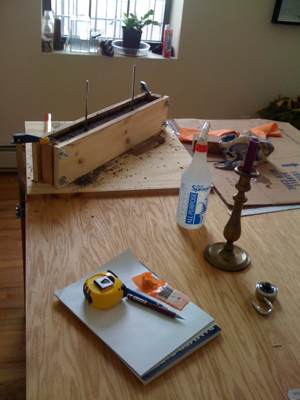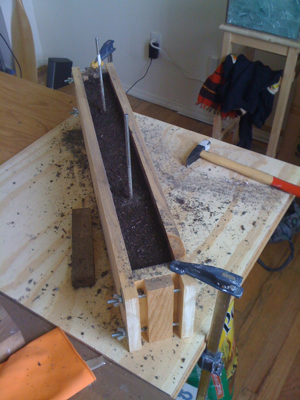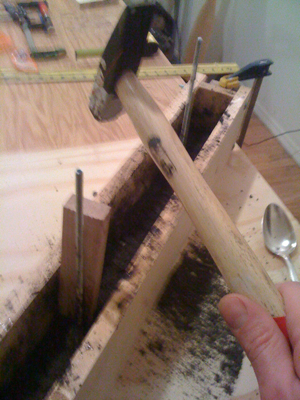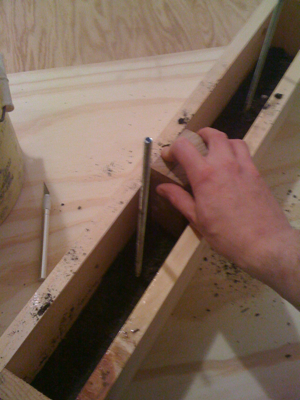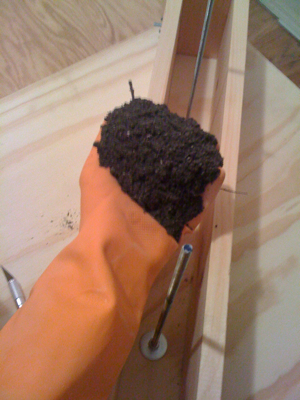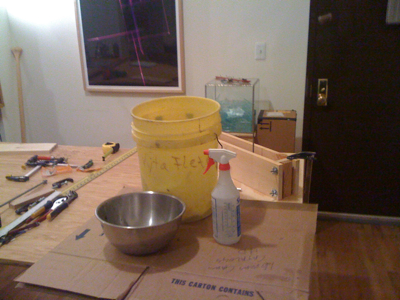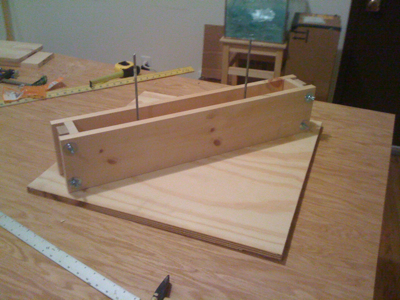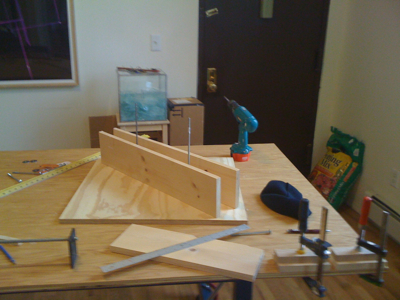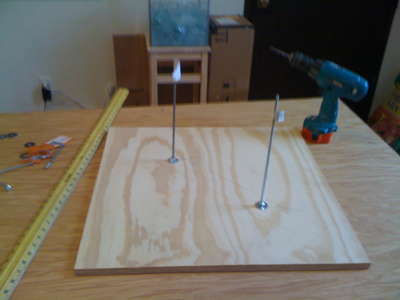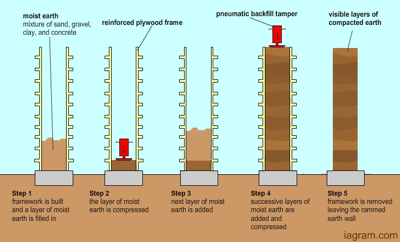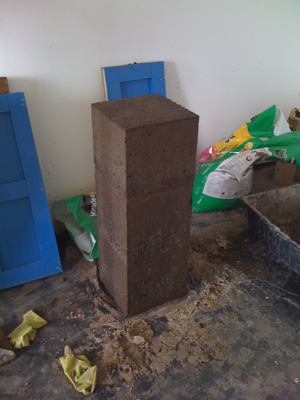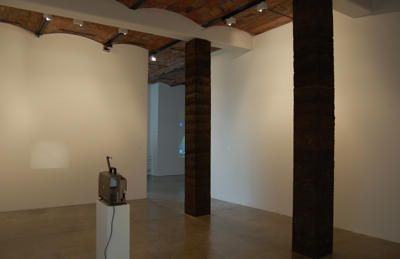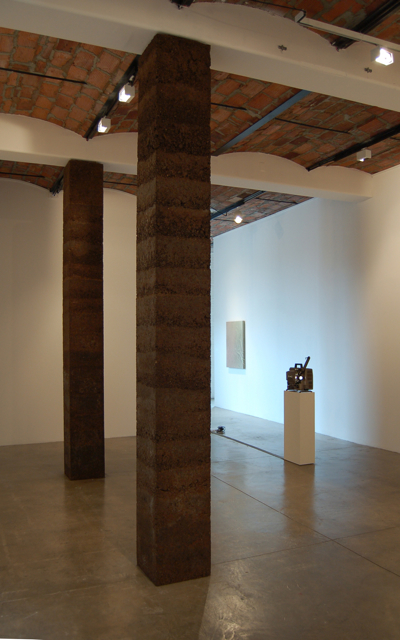
(Not)Architecture: Kunsthalle (2010), presented as part of Greater New York at MoMA PS1, was the first use of rammed earth in what would become a series of (Not)Architecture projects. Responding to PS1’s history as a public school converted into an exhibition space, the work focused on the architectural changes made to alter its institutional status, particularly the construction and removal of interior walls. Two rammed-earth columns were built to the same proportions as the structural columns concealed within those walls. Miracle-Gro™, purchased from a local hardware store, served as the “local earth” available in Queens, New York, for the construction of these indoor earthworks. Constructed using temporary formwork and compacted in successive layers, the columns stopped approximately two inches short of the ceiling, remaining visibly non-structural. The logic of site-specific architectural intervention was inverted so that the columns were nothing more — and nothing less — than sculptures, occupying a position somewhere within Rosalind Krauss’s expanded field.
The installation was accompanied by the third iteration of Structural, Uncontrolled, Hollywood, Political, Auteur, Cosmic, Happy, Sad, and Ordinary, in which the illuminated field projected by a 16mm film projector running without film was painted out to compensate for the difference between the projection and the ambient light of the gallery.
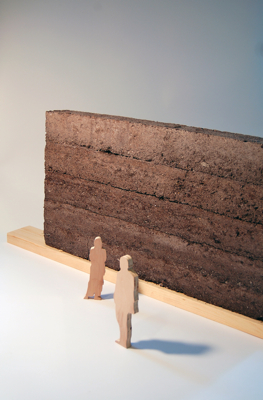
The (Not)Architecture projects use an adaptation of ancient building methods that have recently been used as alternative ‘green’ building practices in which earth is packed into forms. When left un-plastered, objects built using this method recall geological or archeological strata. What is in fact seen in these strata, however, is a record of the production of the work and how it changes as the material – commercially available potting soil – dries, hardens and cracks over the course of an exhibit.