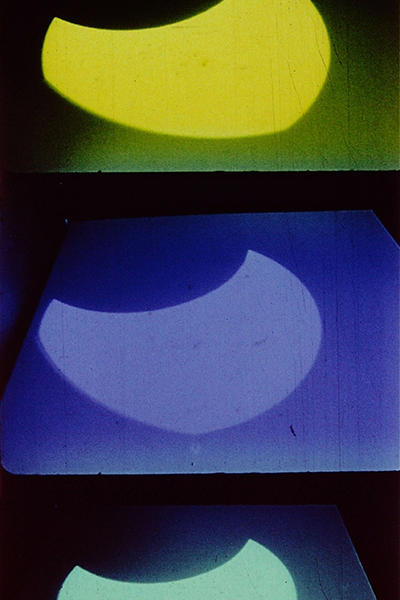
PALOMAR is a 16mm color film approximately twelve minutes in duration documenting the partial solar eclipse visible from Southern California on October 23, 2014. The eclipse was filmed from Mount Wilson Observatory using an adapted amateur telescope. Until the completion of Palomar Observatory in 1948, Mount Wilson housed the world’s largest-aperture telescope.
The title is drawn from Italo Calvino’s 1983 novel Mr. Palomar, whose twenty-seven chapters are organized into three categories of inquiry: visual, anthropological, and speculative or cosmic. Beginning with a black-and-white original, I worked with a Hollywood color timer to produce a color negative in which each shot was assigned a color according to Calvino’s structure, matching the three categories to red, green, and blue respectively. The completed film comprises thirty-three shots — one for each chapter of the novel together with seven additional shots corresponding to its index.
In addition to being screened in theatrical settings, the film was exhibited on a continuously running loop using a custom-built projector looper constructed from aluminum, brass, and Plexiglas, including in Palomar at Laure Genillard, London, in 2016.
Color positive film printed from color-timed internegative printed from black and white original positive film. Shot Oct. 23, 2014 at Mt Wilson Observatory, 1:33–3:45 pm.
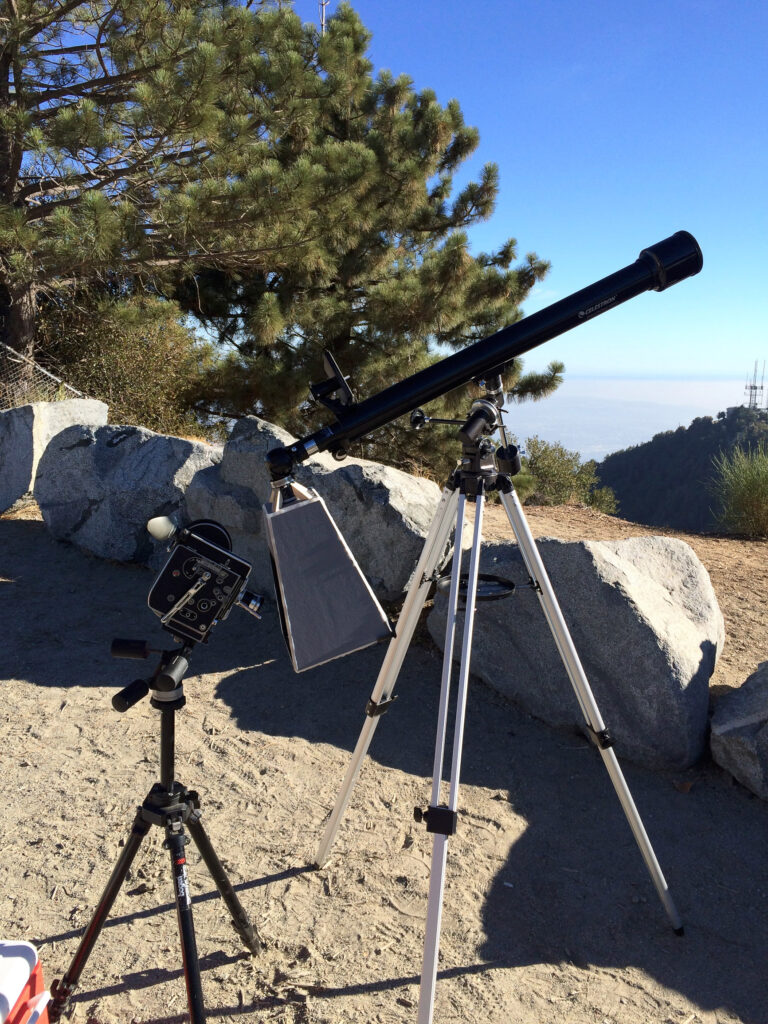
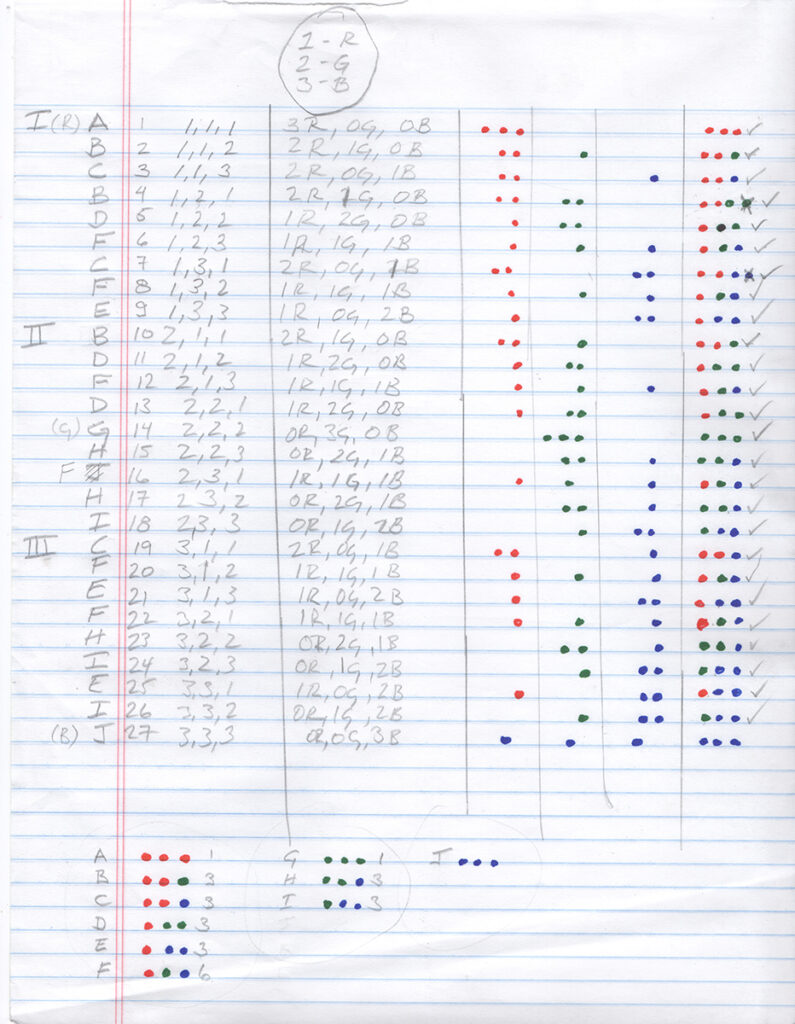
Working with a Hollywood color timer, the professional who adjusts the light used in printing color film to affect the color of a final print, I made a color negative from the black and white positive (reversal) original. Each shot was colored according to the formal structure laid out in Calvino’s index, matching the numbers 1, 2, 3 with red, green, and blue light respectively. There are 33 shots in the film, one for each chapter plus seven shots at the end to represent the index.