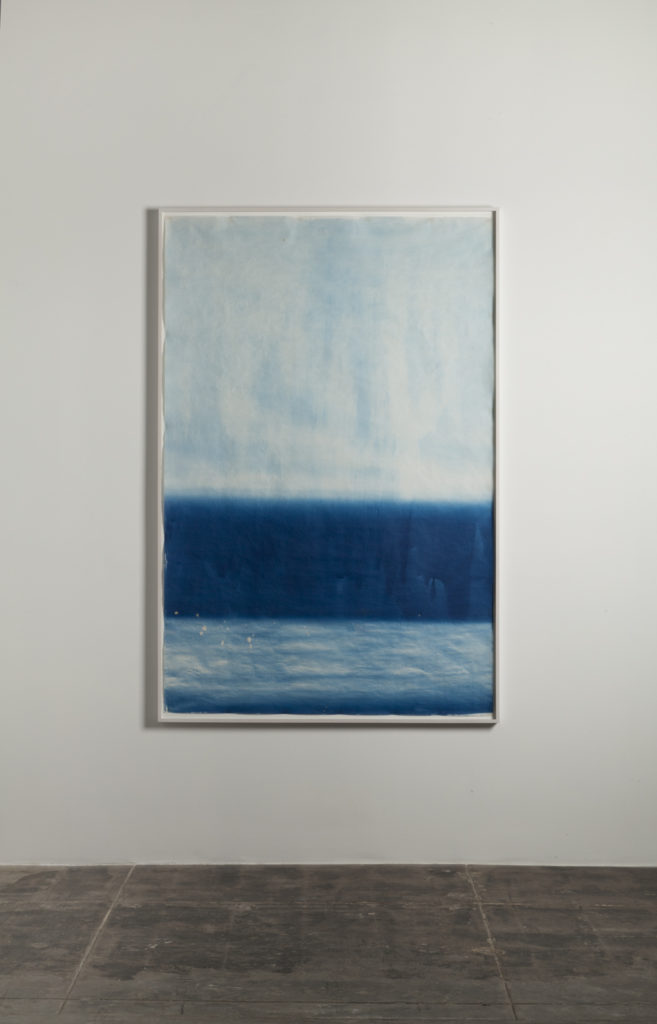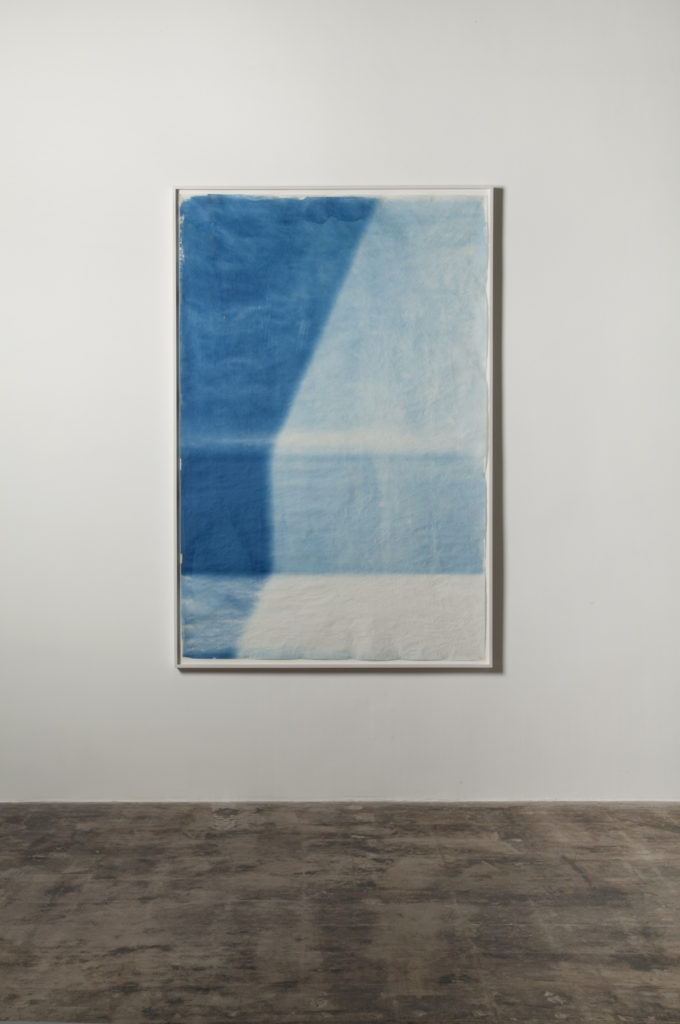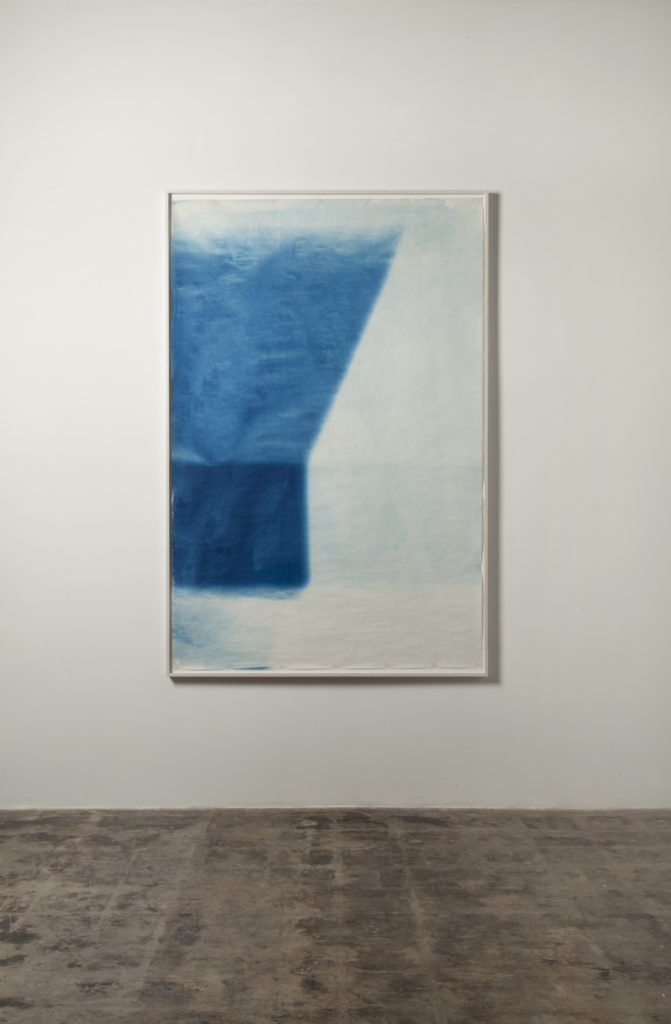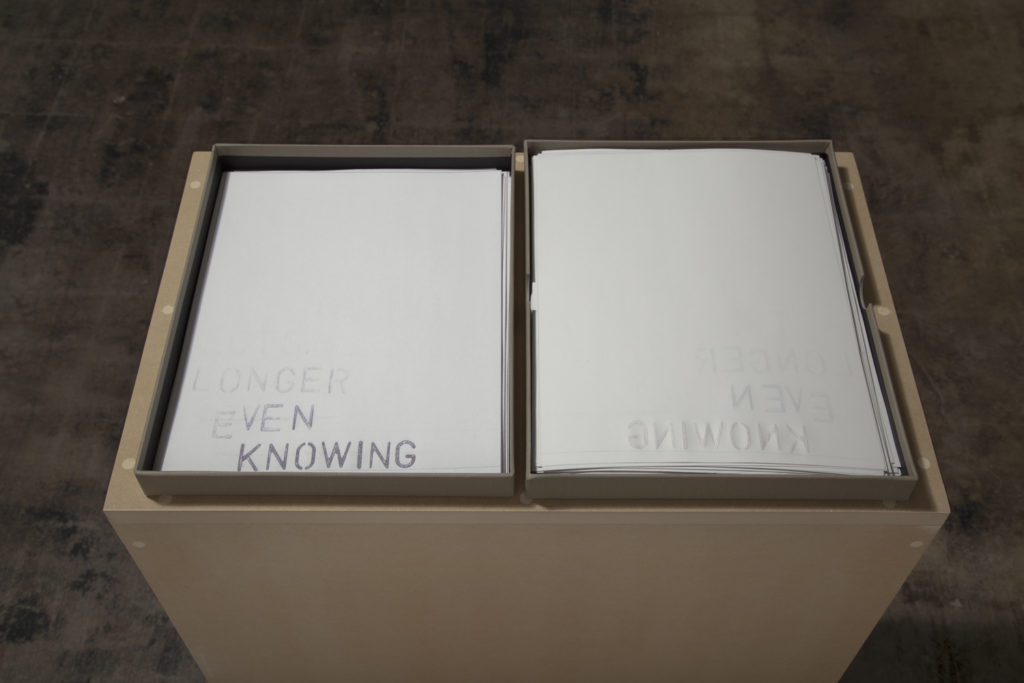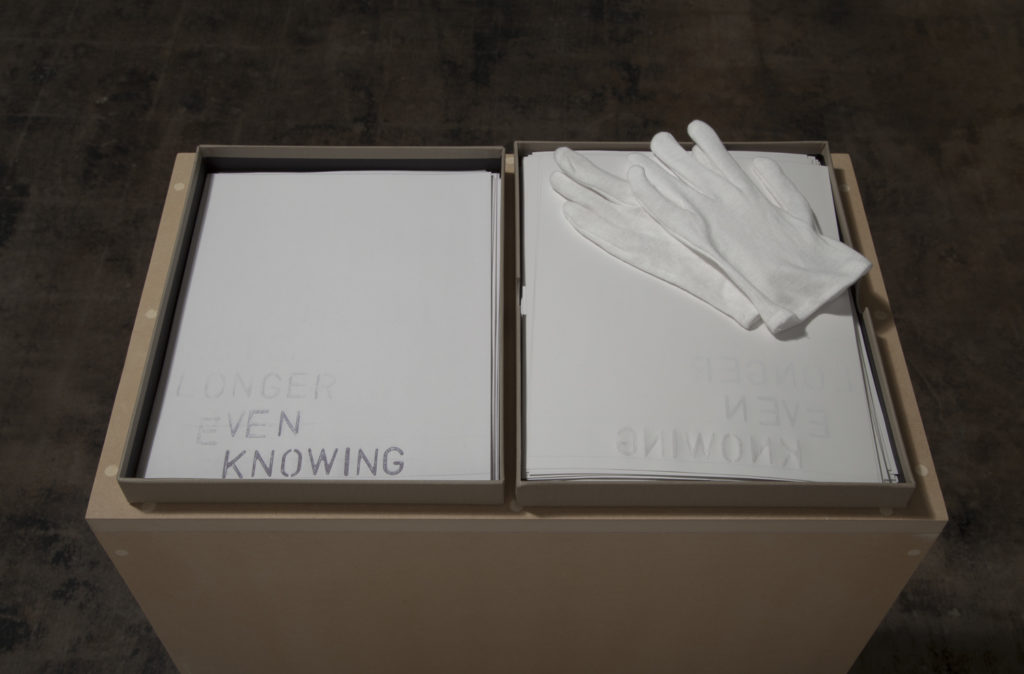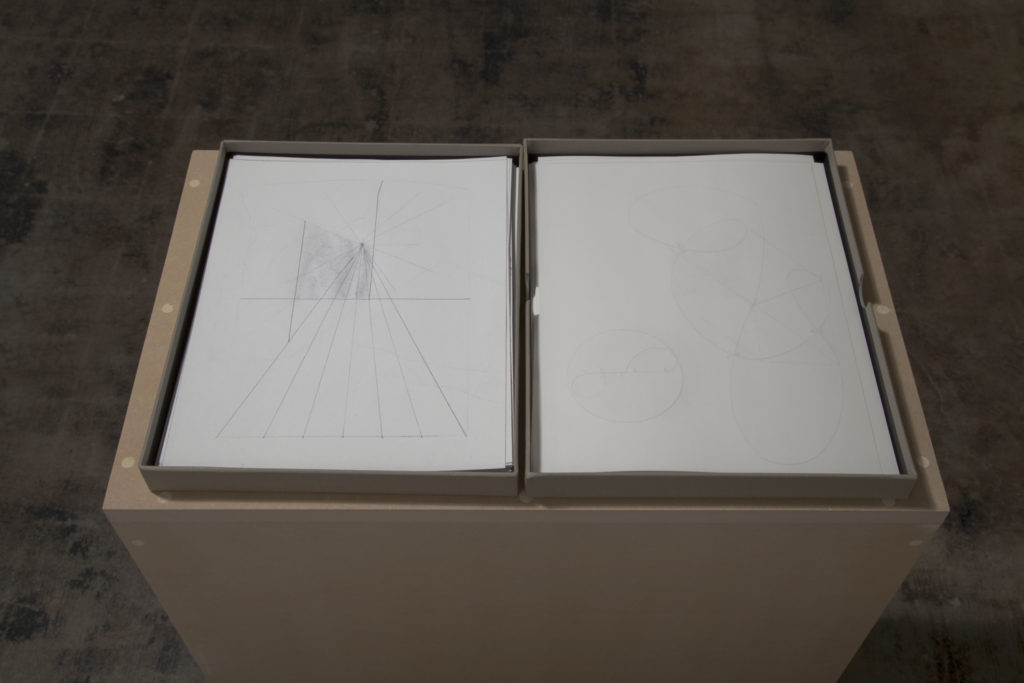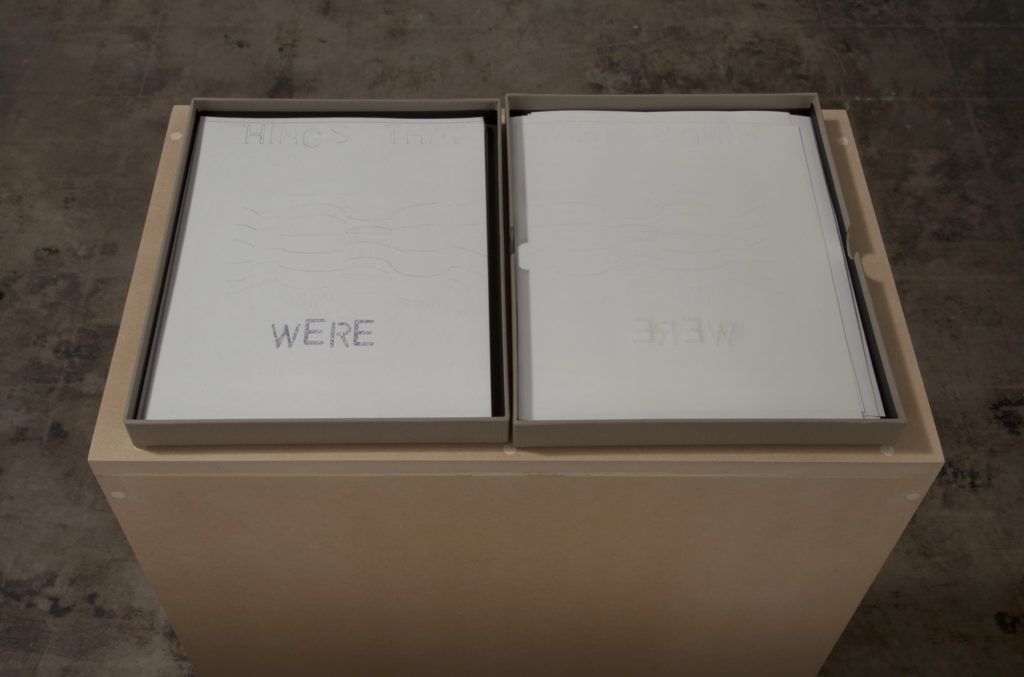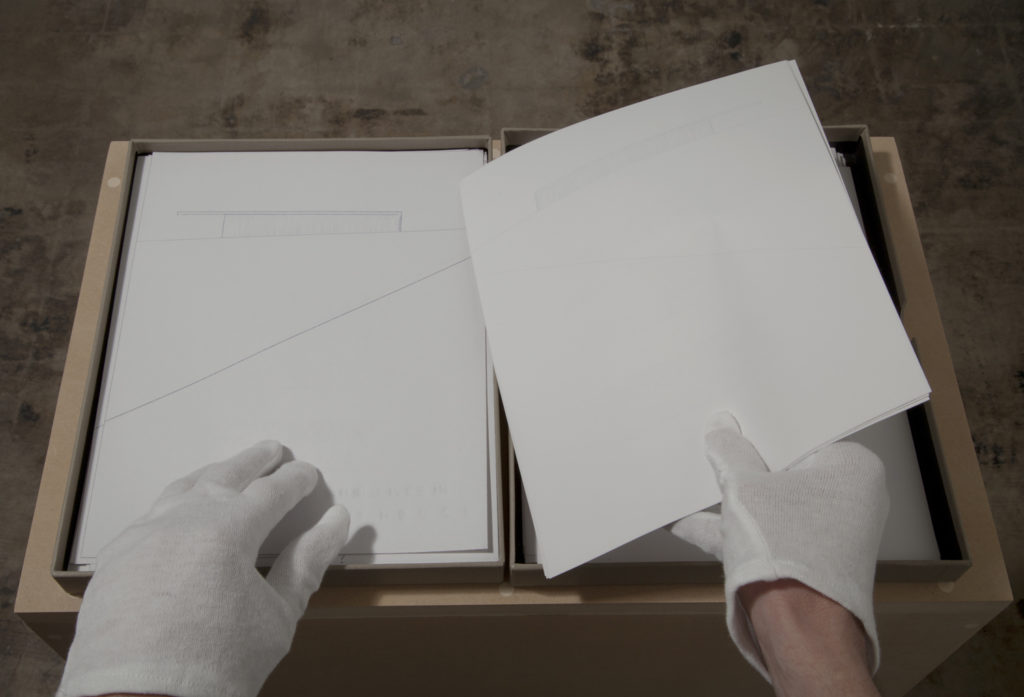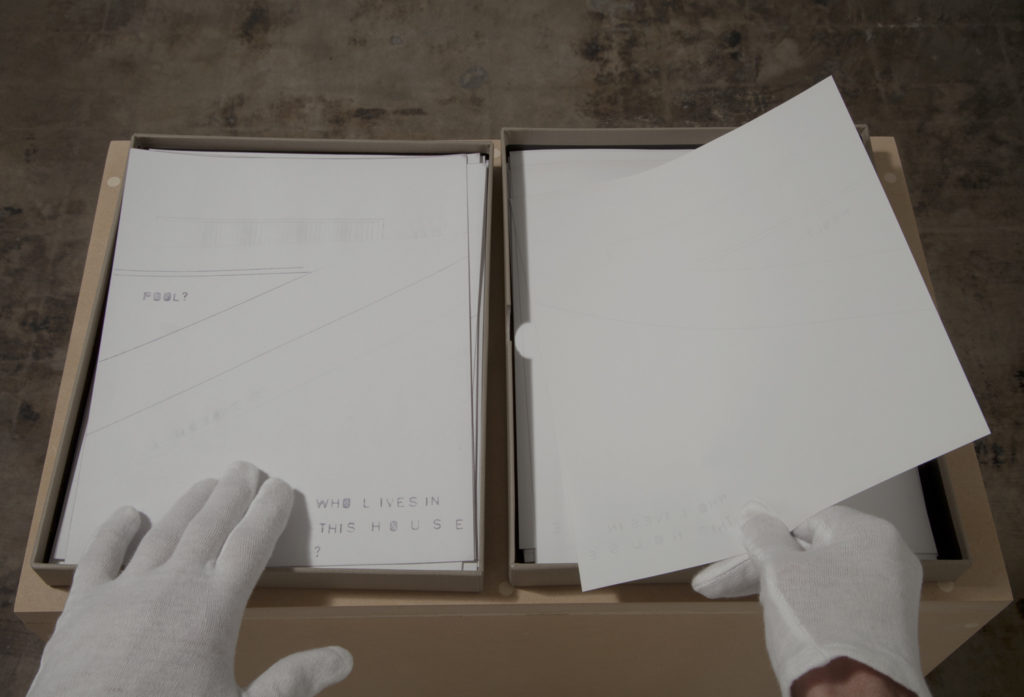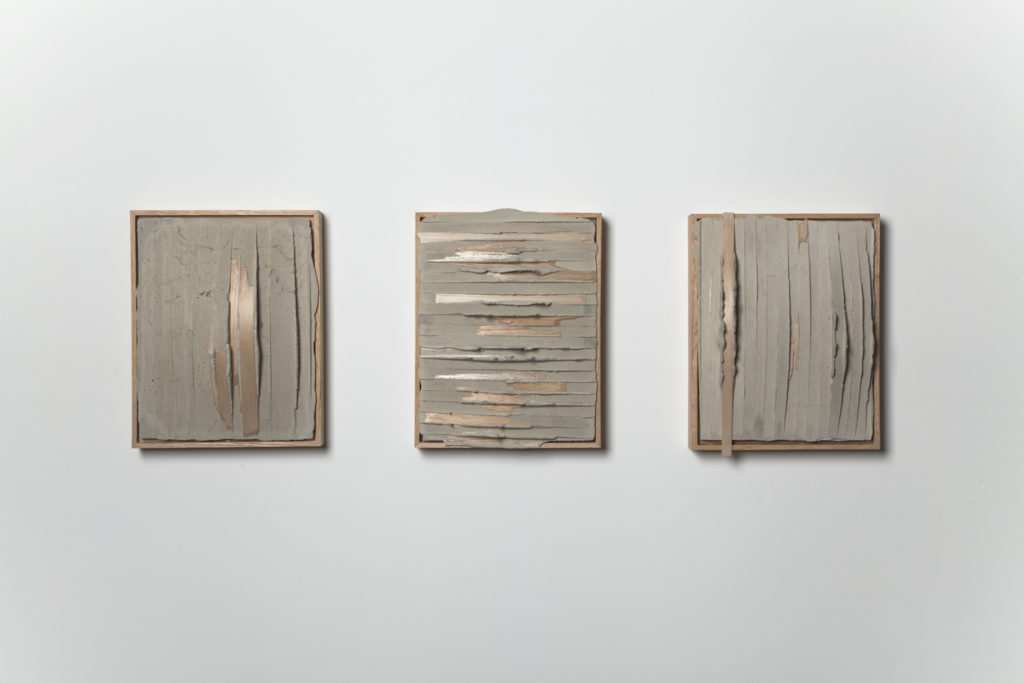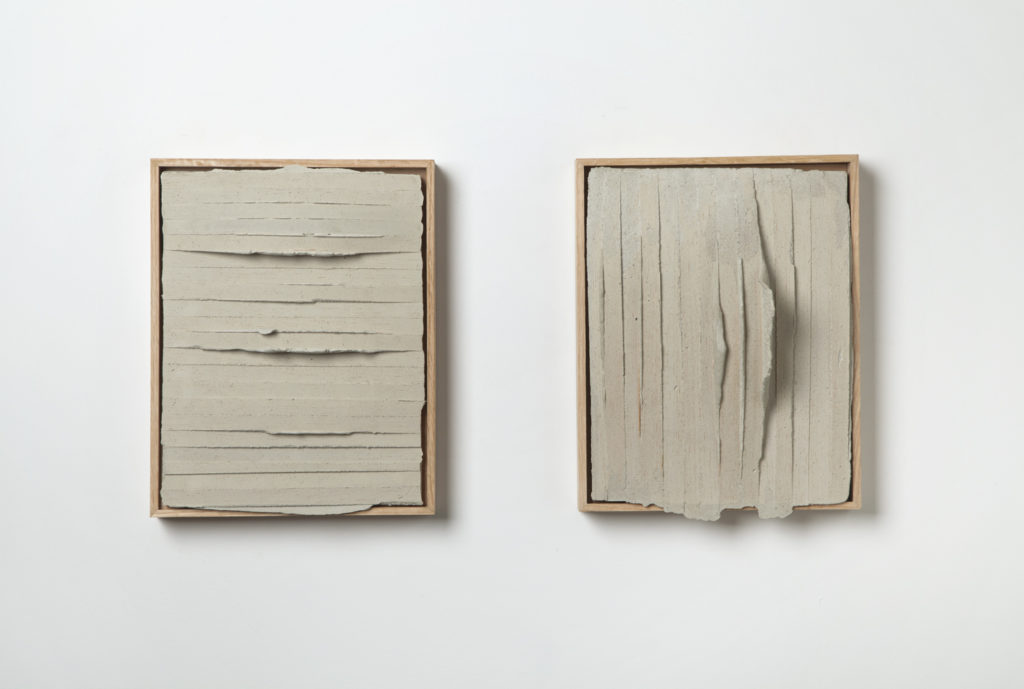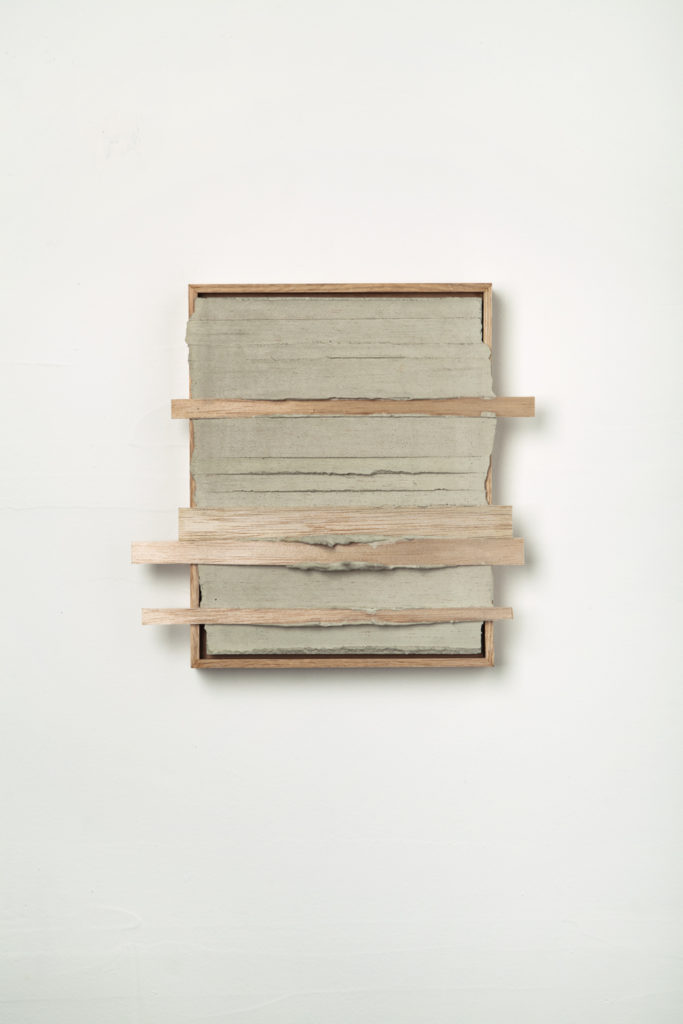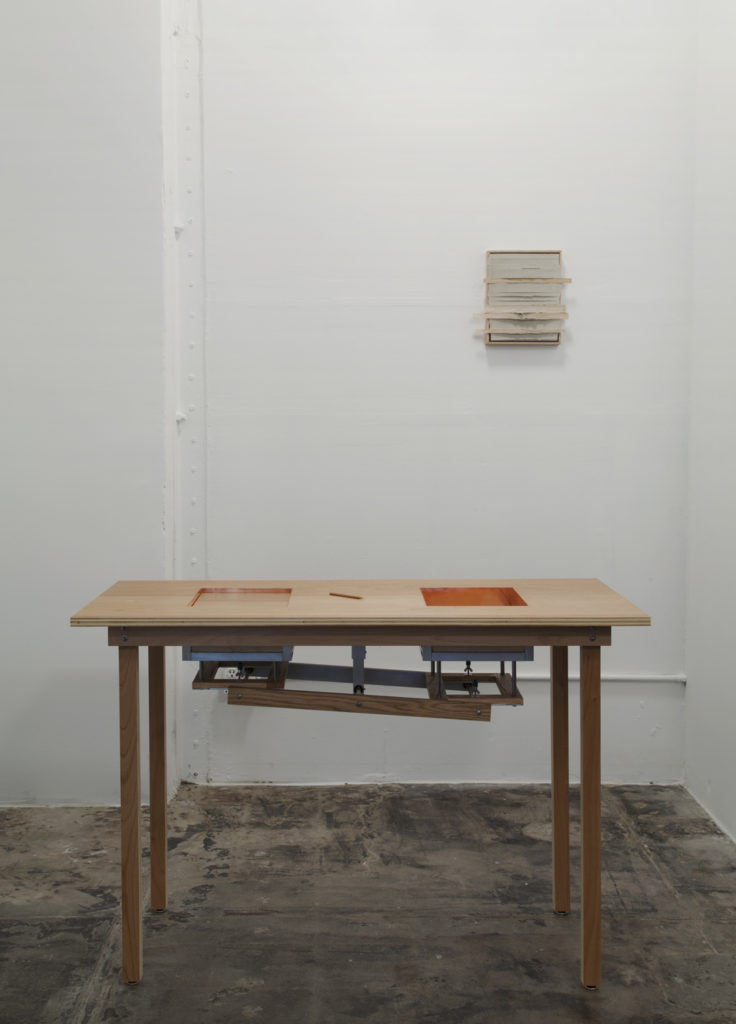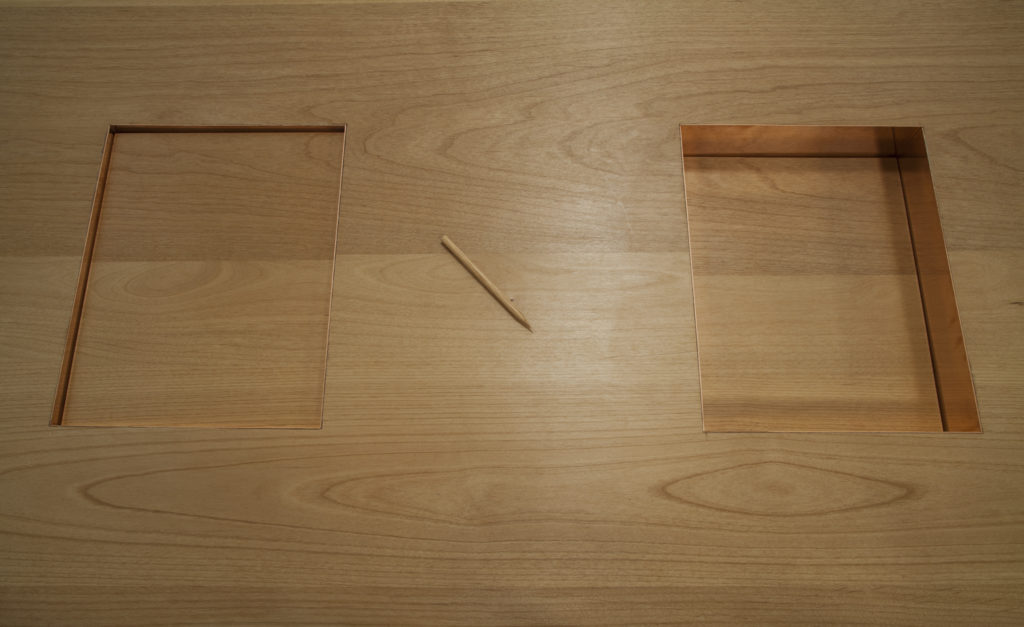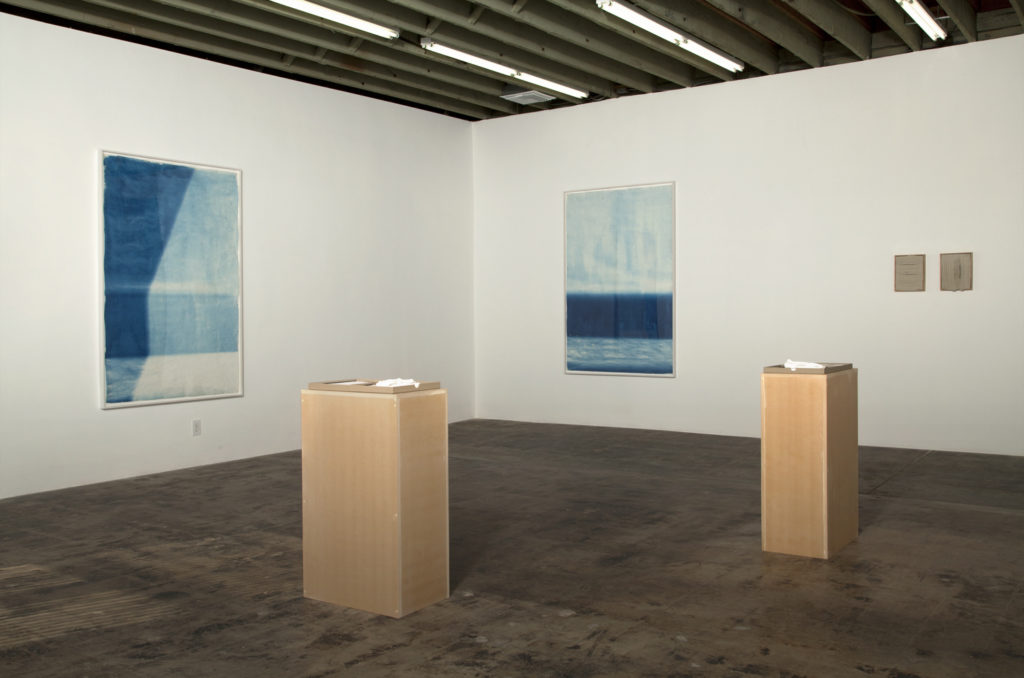
Ways & Means, at Redling Fine Art, Los Angeles, in January 2012, gathered three series in which the procedure is as intrinsic to the work as its material result, each adapting a technique developed for another discipline, era, or purpose so that the work becomes a record of its own adaptive use. Turrell Exposures are cyanotypes made directly on the surface of an architectural space — here James Turrell’s installation Meeting at MoMA PS1, New York — registering light and architecture in a single, non-differentiated image; the photosensitive emulsion is brushed on by hand, and the brushmarks remain alongside the ripples left by air moving through the room, so each print is at once a photographic and a gestural index. The B(n)CC drawings are made on non-carbon transfer paper: a stylus is drawn across the top sheet of a stack, but its inked trace appears on the sheet beneath, so the drawing is seen only when the page is turned; no sheet is singular, each a response to the images accumulated on the pages before it. The Concrete Paintings are poured into wooden molds that twist and bend under the weight of the concrete, referencing both the gray monochrome and the molded concrete of Brutalist architecture — literally Arte Concret.
The exhibition was accompanied by waysandmeans.us, a website that sets out not only the Ways of the practice — its places, people, and experiences — but also its Means: the materials, processes, and instructions behind each technique. Offered as a frank how-to that encourages others to copy and reuse the processes, it extends the work both materially and philosophically. (Also a standalone web project: waysandmeans.us.)